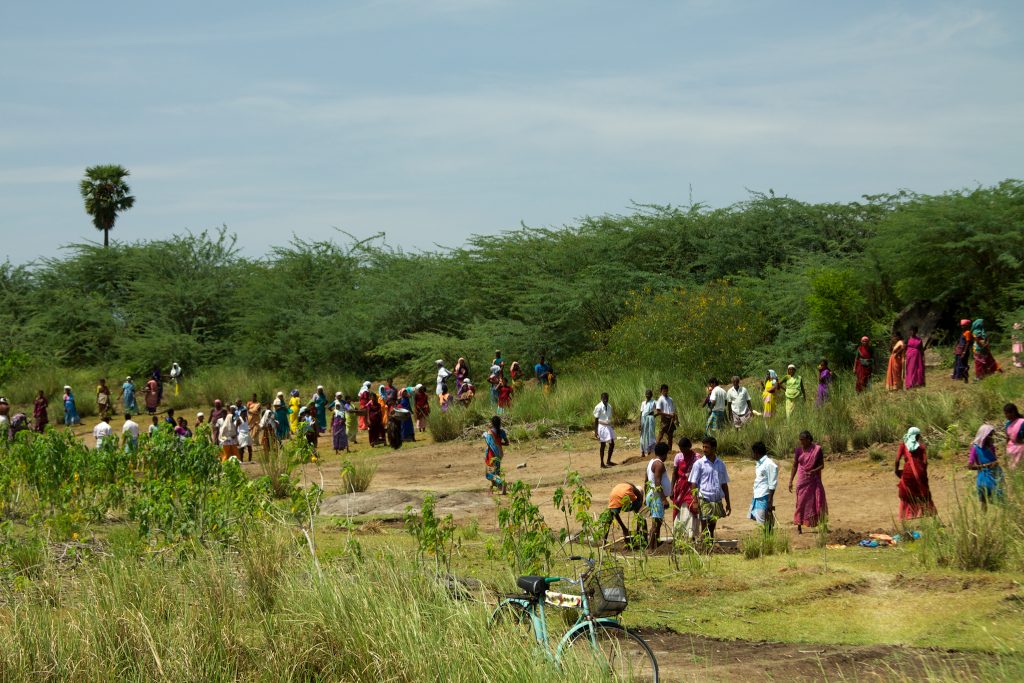
We are past the point of treating climate change as a future risk for India’s rural economy. From recurring heatwaves to an increasingly unpredictable monsoon, climate volatility has become part of everyday life. For millions of rural households, the Mahatma Gandhi National Rural Employment Guarantee Scheme (MGNREGS) has functioned as a safety net in exactly such moments. As India’s flagship rural employment programme, it guarantees up to 100 days of wage employment per household each year, with an additional 50 days during severe droughts or climate extremes.
Despite operational issues, MGNREGS has played a critical role in climate adaptation. It has provided income security during droughts, floods, and lean seasons, while also supporting the creation of local assets that reduce vulnerability over time.
With Parliament now having passed the Viksit Bharat – Guarantee for Rozgar and Ajeevika Mission (Gramin):VB- G RAM G, formally replacing MGNREGS, the debate cannot be limited to efficiency or delivery reform alone. The new law explicitly foregrounds climate resilience, marking an important shift in the narrative. But a closer reading highlights contradictions. In prioritising long-term asset creation, the new framework risks weakening the immediate income security that allows households to survive climate shocks in the first place.
Reform is necessary. But climate-blind or climate half-measures will not be future-fit.
MGNREGS legacy: absorptive versus transformative resilience
To understand what is at stake, it is important to look at how MGNREGS actually contributed to resilience.
MGNREGS was strongest in delivering absorptive resilience. As a rights-based, demand-driven programme, it helped households maintain some income during droughts, crop failures, and seasonal unemployment. This mattered. Wage access reduced distress migration, limited dependence on high-interest debt, and helped families avoid selling livestock or pulling children out of school. In many ways, MGNREGS functioned as a shock absorber.
Where the programme struggled was in delivering transformative resilience. That is, enabling households to move beyond climate risk thresholds through durable, high-quality assets that could improve or diversify livelihoods. While water harvesting structures, plantations, and land improvements were implemented at scale, planning was often fragmented and not well aligned with climate risk. In many areas, assets failed to withstand floods or extreme rainfall.
This gap is real and justifies reform. But resilience is not created the moment an asset is built. Assets require maintenance. Where community ownership was strong, structures lasted. Where it was weak, assets degraded quickly. In climate-exposed landscapes, poorly maintained infrastructure can even amplify risk.
VB-G RAM G seeks to address these weaknesses by emphasising saturation, landscape-level planning, and asset durability. This is a legitimate ambition. The risk lies in achieving this at the cost of the programme’s absorptive function. We cannot build the future by starving the present.
VB-G RAM G: Design choices that can leave people exposed during climate shocks
The most significant shift in the new law is the move away from a rights-based, demand-driven guarantee toward a more standardised, allocation-based system. This shift carries several interlinked risks.
1. Fiscal risk without risk pooling
Climate risk in India is unevenly distributed. States such as Bihar, Jharkhand, Odisha, and Assam face some of the highest exposure to floods, droughts, and heat stress, while also having the weakest fiscal capacity.
Under MGNREGS, the Centre bore the financial risk of climate shocks. When drought increased demand for work, the Centre was legally required to fund it. This was national risk pooling. A core principle of climate justice in a federal system.
If VB-G RAM G caps central allocations based on historical norms, it will fail to account for the unpredictable nature of climate shocks. If demand exceeds the fixed central allocation, the burden will shift to state budgets. The likely outcome of this will be suppressed demand, delayed payments, or reduced work availability, precisely when households will need support the most.
This risk cannot be resolved simply by increasing the number of workdays. While VB-G RAM G promises up to 125 days of employment per household per year, experience under MGNREGS shows that this figure alone is not meaningful. On average, rural households accessed only around 50 days of work per year, and only about 7 per cent were able to claim the full 100 days they were entitled to.
If state budgets are capped, higher entitlements will not translate into support on the ground. What matters is whether the poorest and most climate vulnerable households are actively prioritised and supported to access more days of work when they need it most.
International experience offers useful lessons. In Brazil, social protection programmes use ‘active search’ approach to identify and reach the most vulnerable households, rather than waiting for them to apply. A similar approach under VB-G RAM G could ensure that expanded entitlements are not just promised, but actually delivered and linked to assets that help households move towards more secure livelihoods over time.
2. The economics of early action
This rigidity is also financially inefficient. Evidence from modelling across eight countries, including India, shows that acting early is far cheaper than responding after disasters. Early action works in two ways: by providing income support in anticipation of a crisis through wage employment or cash transfers, and by investing early in assets and systems that reduce future damage from floods, droughts, or cyclones.
Even at current levels of global warming, India could face disaster-related losses exceeding US$11 billion billion from severe but plausible climate shocks (1 in 20 years disasters). Responding only after damage occurs would cost over US$48 billion. By contrast, early resilience investments could deliver similar protection for around US$2.2 billion, while anticipatory income support would cost about US$5.4 billion.
MGNREGS largely functioned as a responsive safety net, i.e. providing work after shocks hit, while also creating assets. VB-G RAM G still has the opportunity, through its rules and implementation, to strengthen this model by incorporating anticipatory wage employment triggered by climate early warnings. Failing to do so would mean continuing to rely on slower, more expensive, and less effective responses.
Equally important is timing. More days of work after a crisis has already hit cannot fully compensate for lost harvests, rising debt, or distress migration. The greatest returns come when support is provided before households are forced into crisis coping strategies. In a climate-stressed economy, timing matters as much as quantity.
3. The fallacy of the agricultural pause
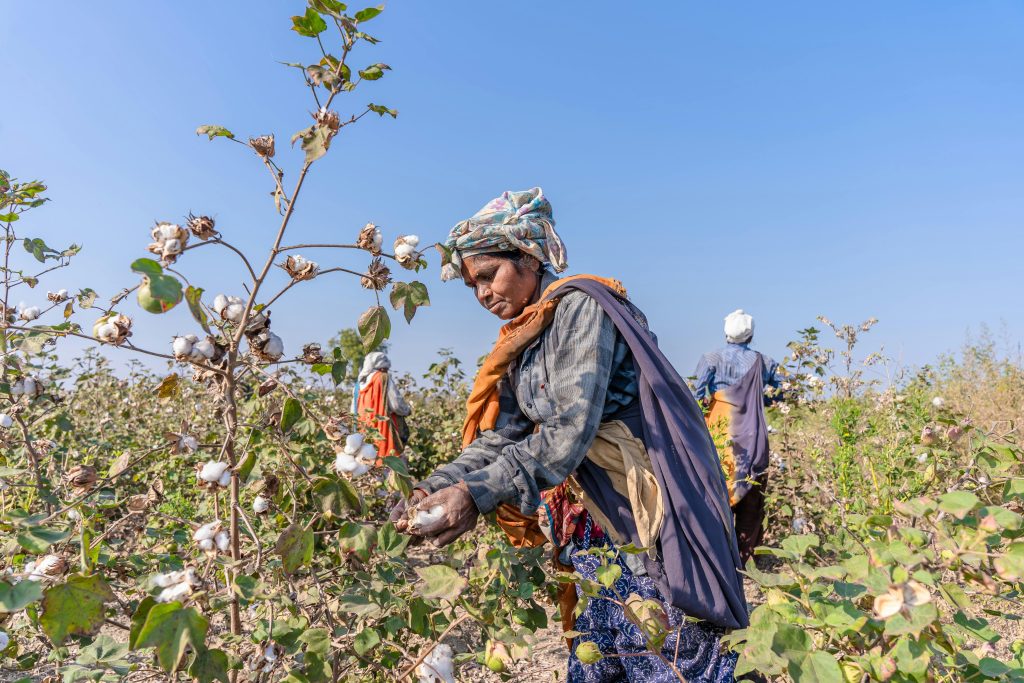
The proposed 60-day pause during peak agricultural seasons assumes farming will follow a predictable calendar. Climate change has already disrupted this. Unseasonal rains damage crops during harvest, water scarcity leads to crop failure, heat stress reduces yields, and floods or cyclones can wipe out an entire season’s income in days.
If a climate shock destroys crops during a mandated pause, households will lose both farm income and access to public employment. A resilient system needs the flexibility to respond to what is happening on the ground rather than a rigid pause that can deepen vulnerability.
4. Labour protection is climate adaptation
Extreme heat is emerging as one of the most serious threats to rural livelihoods. In 2024 alone, heat exposure reduced labour capacity by an estimated 247 billion potential work hours.
Public works programmes like MGNREGS offered work close to home and protected basic worker rights, especially for women, by ensuring access to drinking water, shade, rest breaks, and facilities for workers with young children. Flexible work timings allowed people to adapt to heat stress.
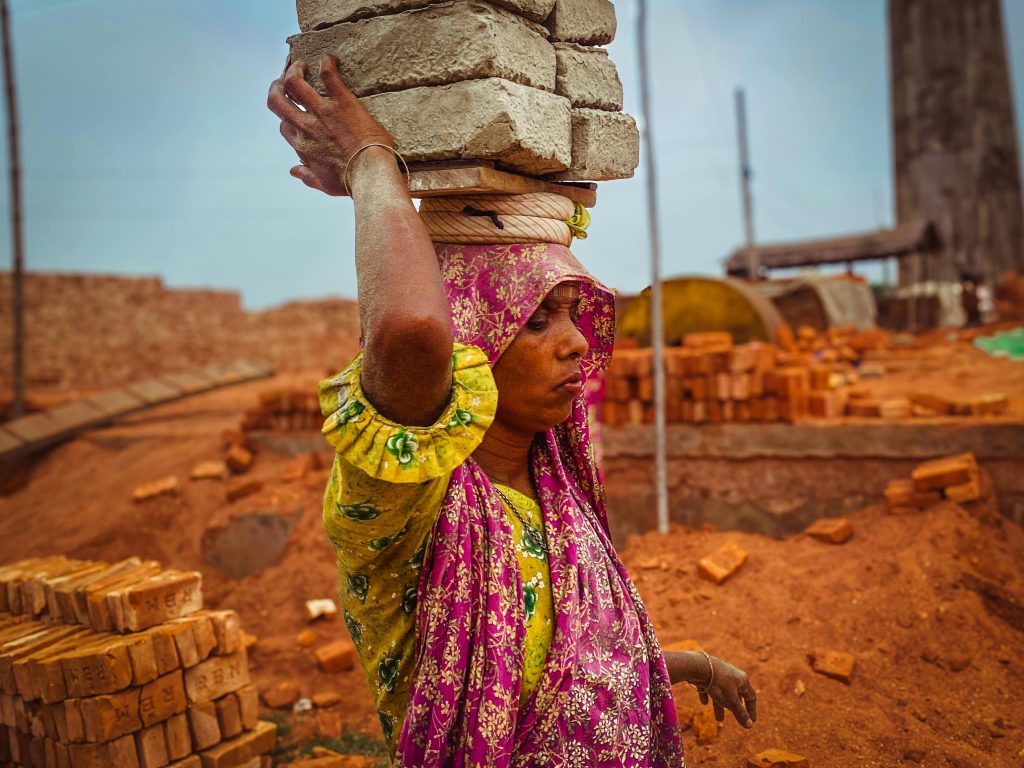
If VB-G RAM G restricts access to public employment during periods of heat or income loss, people will not stop working. They will move into informal labour markets where protections are weaker and health risks are higher. In a warming economy, protecting workers’ rights and safety must be a core part of climate resilience.
5. Technology for resilience infrastructure and not just surveillance
VB-G RAM G places strong emphasis on technology for planning and monitoring. If used well, this is an opportunity. Tools such as CRISP-M show how climate data can improve asset choice and design and support longer-term drought-proofing.
But data alone is not enough. Satellite images and models often miss local realities, such as how water flows during heavy rain, how soils behave, or where drainage fails. These are details local farmers and workers understand well. When planning relies solely on top-down data, assets may look good on maps but fail on the ground.
Technology should support better decisions, not replace local judgement. When communities are involved, assets are more likely to be used, maintained, and adapted over time. When technology is used mainly for surveillance, there are risks that it may weaken community ownership, the very foundation on which long-term resilience depends.
Recommendations: making VB-G RAM G future-fit
With the law now passed, this reform does not need to be reversed. But its rules, financing, and implementation must work better for people living with climate stress.
First, funding must respond automatically when disasters strike. Based on predefined triggers, such as drought declarations, heat alerts, floods, or cyclone warnings, the Centre should release additional funds so work can expand when it is most needed.
Second, early warnings should trigger early action. Work availability should increase before livelihoods collapse, not after losses have already occurred.
Third, the agricultural pause must be flexible. When crops fail due to climate shocks, public employment should be available as a fallback.
Fourth, work must be designed for rising heat, with flexible hours, water and rest at worksites, and protection from income loss when heat makes work unsafe. The government should also ensure that other rural worksites adhere to basic worker rights and safety standards. Earlier, people could fall back on MGNREGS when private farms or contractors did not offer safe working conditions. That option must not be lost.
Fifth, local voices must continue to shape decisions. Technology should support Gram Sabha planning, not replace it.
Finally, resilience assets must be cared for, not just built. Maintaining water structures, restoring mangroves, and protecting soils must be treated as essential, ongoing investments.
Reforming for resilience, not retreating from rights
The risk is not reform itself, but reform that quietly weakens the principles that made MGNREGS effective during crises. A system that contracts when need is highest does not reduce climate loss and damage. It shifts the burden onto those least able to bear it.
VB-G RAM G can become a stronger climate safety net depending on how it is implemented in practice. But resilience does not come from infrastructure alone. It depends on whether families can access income during crises, whether workers are protected in extreme heat, and whether communities retain a voice.
In the end, VB-G RAM G will be judged by who is protected when climate shocks hit, and who is left to cope alone.

Ritu Bharadwaj – Director, Climate Resilience, Finance and Loss & Damage/ALL ACT at International Institute for Environment and Development (IIED)
With more than 20 years of senior policy development, research and management experience in government, funding agencies and international NGOs, Ritu has worked extensively on social protection, climate resilience (policy, planning and finance), forest and watershed management, resource conservation (water and energy efficiency, renewables and circular economy), livelihood and gender issues. Read more about Ritu and follow her @ https://www.linkedin.com/in/ritu-bharadwaj-410130156/