Where the rivers meet, a Monastery stands
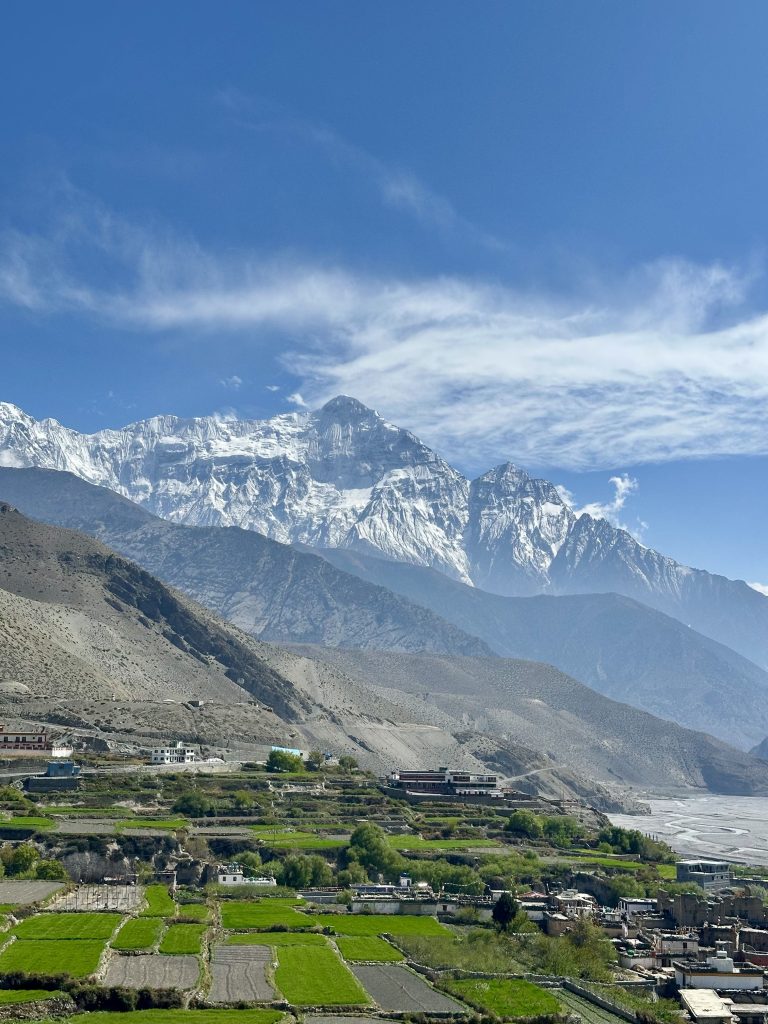
Standing on a narrow tongue of land between two rivers, Kag Chode Monastery immediately struck me as both symbolically powerful and physically precarious. Built centuries ago, as a central religious site in Kagbeni, it embodies continuity in a landscape shaped by erosion and flow. For residents, it is more than simply a monastery: it is a source of pride and a focal point of social and ritual life. The monks are not distant religious figures but deeply embedded members of the community, officiating rites of passage, mediating disputes, and sustaining cosmological frameworks that help people make sense of environmental change. It was within this setting that my project unfolded.
My research examined non-tangible cultural loss and damage associated with climate change in three monastic communities in Mustang: Kagbeni, Chuksang, and Lo Manthang. I was interested not only in material damage but also in how environmental shifts shape ritual practice, social cohesion, memory, and systems of knowledge. I kept returning to a set of questions: What does climate stress mean for a monastic community? How do monks interpret and narrate environmental change? And where do their epistemic frameworks meet, or diverge from, formal adaptation planning?
Beginning with tea, conversation, and trust
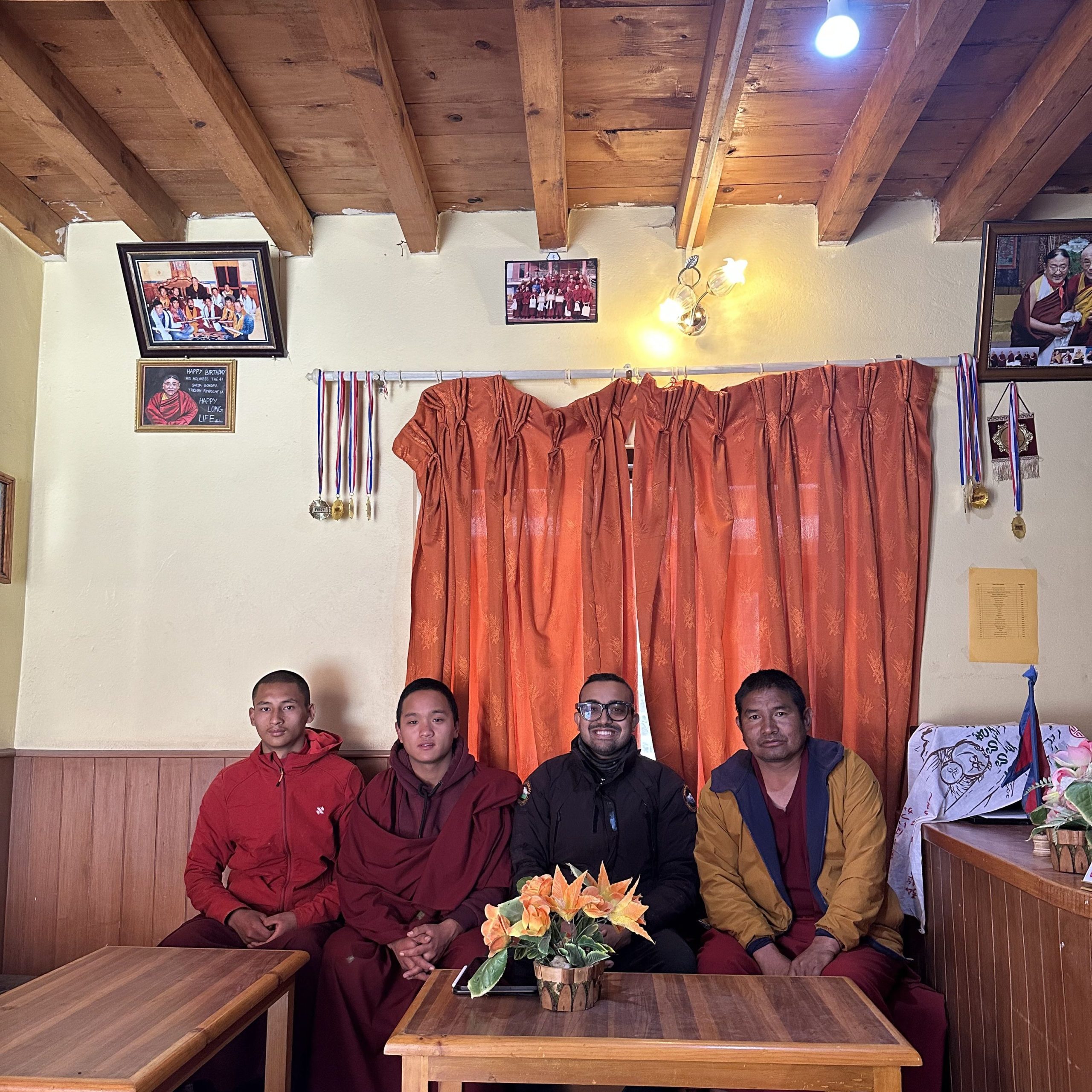
The project began with rapport-building. Across all three sites, my first visits took the form of extended conversations rather than formal interviews. We shared tea, toured monastic compounds, and paused at damaged areas as monks explained what had changed. Senior monks traced cracks in the walls and pointed out shifting foundations, while younger monks described changing seasonal rhythms affecting ritual calendars. These walks were followed by semi-structured interviews that explored perceptions of environmental change, institutional vulnerability, and relationships with state actors.
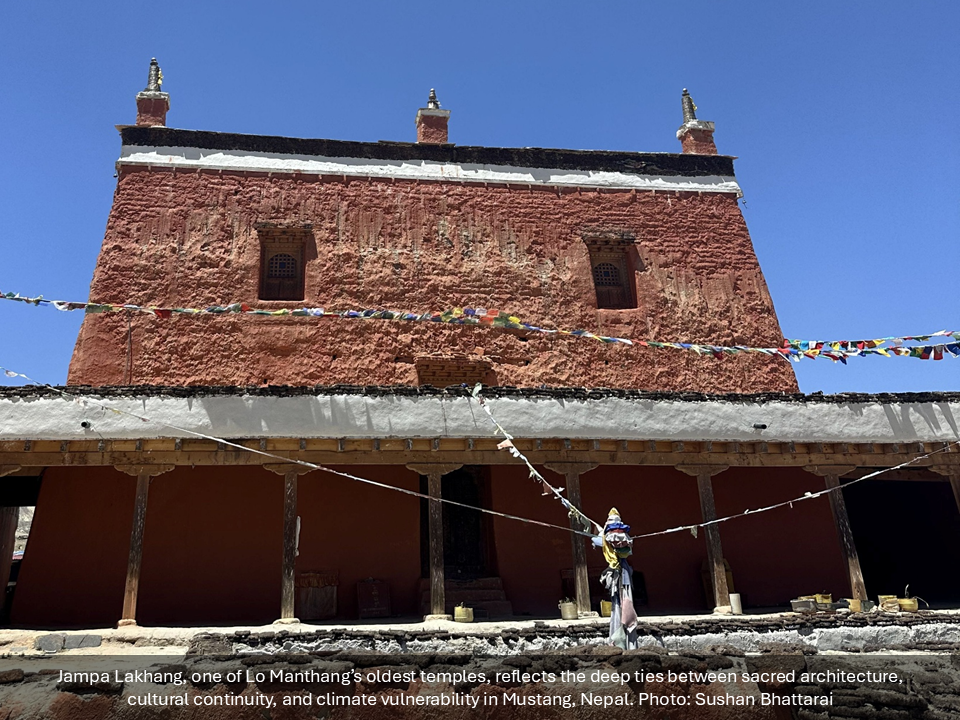
From these visits and interviews, it became clear that climate change is intensifying existing stressors rather than introducing entirely new ones. Monasteries in Mustang have long contended with wind erosion, seismic instability, and changing river courses. Yet monks consistently described these pressures as worsening. Heavier and less predictable rainfall has been linked to faster wall deterioration and greater maintenance burdens. In Chuksang, steep cliffs have heightened fears of rockfall. In Lo Manthang, shifting freeze-thaw cycles were said to affect both agricultural patterns and the structural integrity of older buildings.
How monks make sense of a changing climate
What stayed with me most was the way monks understand climate change on multiple levels. Senior monks, in particular, drew on decades of lived experience. Many had spent more than thirty years in Mustang, and their observations traced declining winter snowfall, altered river behaviour, and the disappearance or scarcity of high-altitude medicinal herbs once common on surrounding mountainsides. Others spoke of changing wind patterns and intense rainfall events that no longer matched historical expectations.
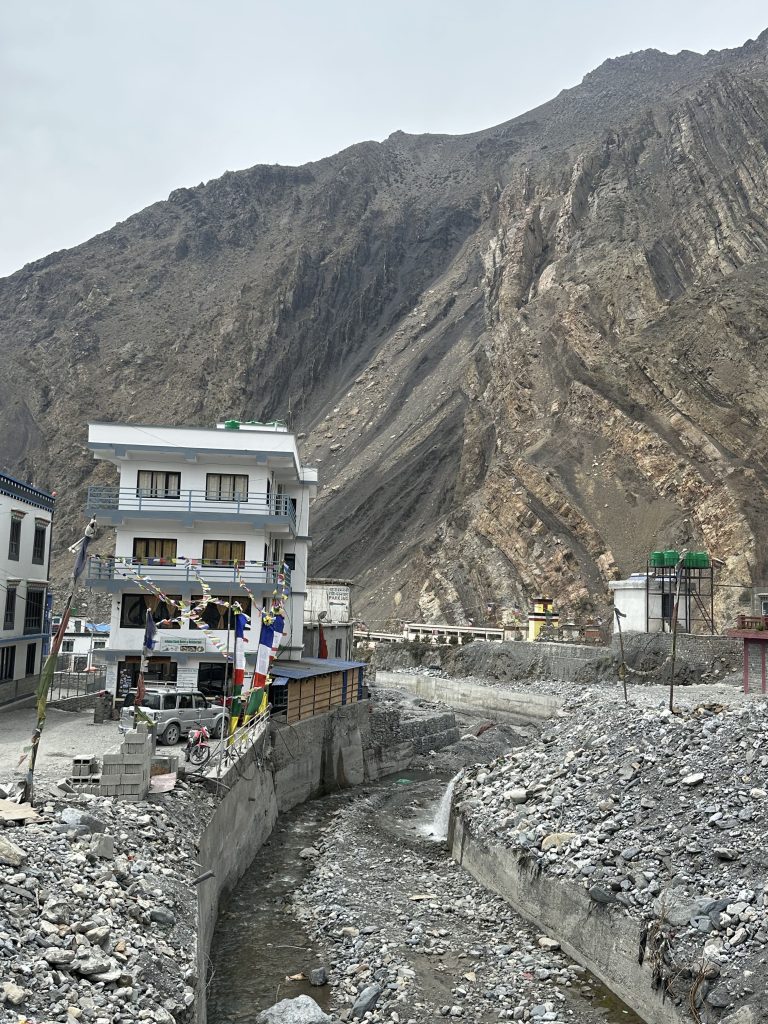
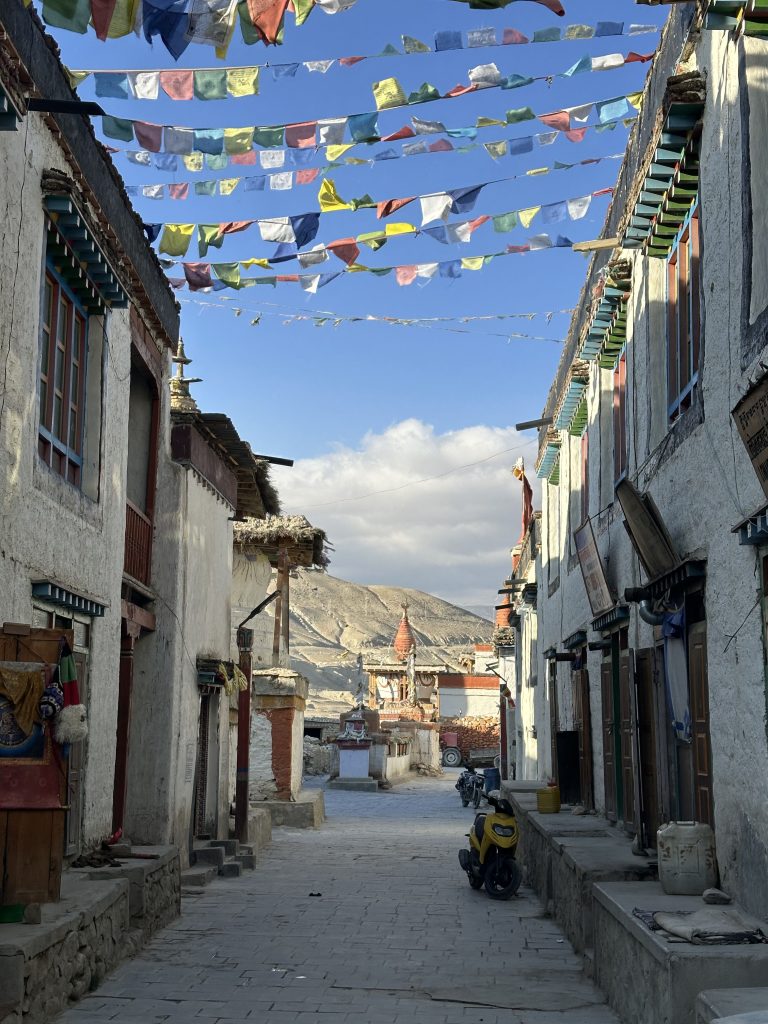
These accounts were not only empirical; they were also deeply interpretive. Monks often situated environmental disruption within Buddhist cosmological frameworks, understanding it as a form of relational imbalance. Climatic events were sometimes explained in moral or karmic terms, tied to broader concerns about human conduct and ecological disrespect. Rather than contradicting empirical observation, these interpretations placed it within a wider ethical and metaphysical system.
The planning gap no one can ignore
When I considered these perspectives alongside Local Adaptation Plans of Action (LAPA), the gap was striking. These processes are typically technocratic, shaped by external vulnerability assessments and quantitative indicators. In the communities I studied, monks were rarely involved in drafting or discussing such plans. As a result, adaptation strategies often fail to resonate with local epistemologies. Technical language circulates through district offices, while monasteries, despite their central role in community life, remain peripheral to planning.
Why Monastic voices belong at the table
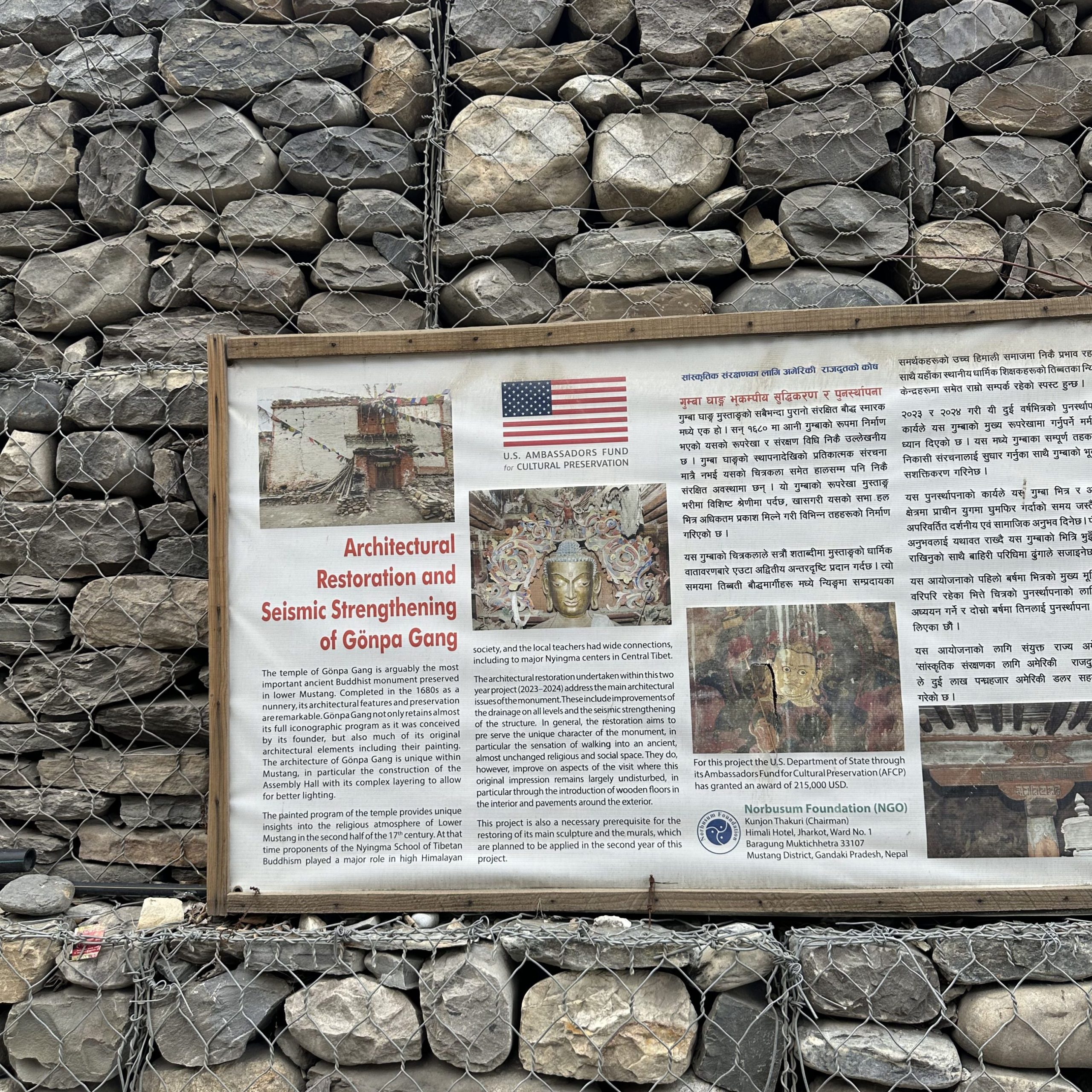
Photo: Sushan Bhattarai
This disconnect matters in practical ways. Monks are among the most trusted figures in their communities. They gather people, share information, and interpret crises in culturally intelligible ways. Excluding them from adaptation planning not only overlooks an important source of historical environmental knowledge but also weakens the social uptake of climate initiatives. Campaigns developed without monastic input can feel externally imposed and culturally opaque. Bringing monks into consultative and decision-making processes, by contrast, could strengthen both legitimacy and effectiveness.
More than heritage, these places hold communities together
My fieldwork also reinforced that monasteries are not just heritage structures; they are active institutions that anchor village life. Daily prayers, festival cycles, and communal rituals create a sense of continuity in the face of environmental instability. In places marked by out-migration and economic uncertainty, the monastery often remains a tether binding people to place. Damage to monastic infrastructure, therefore, has psychological and cultural consequences beyond the loss of walls or murals. It threatens a site of collective memory and belonging.
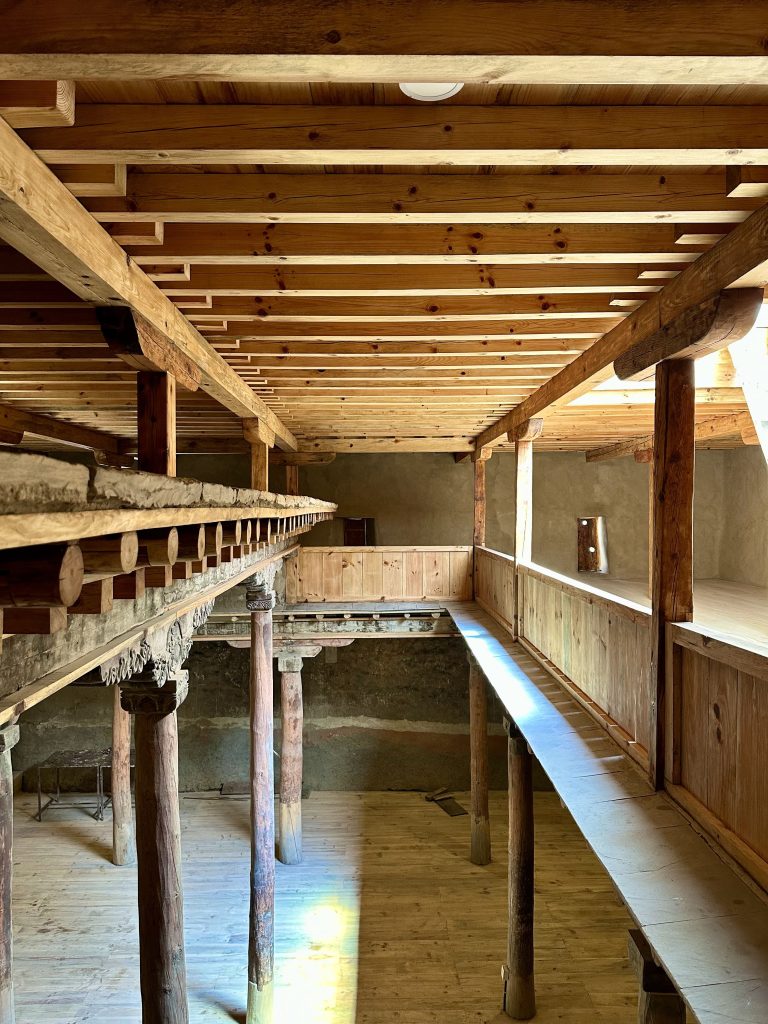
Looking back, I came to see that understanding non-tangible loss requires close attention to voice and narrative. It means listening for nuance, contradiction, and layered meaning. It means moving between debris fields and prayer halls, between cracked plaster and philosophical reflection.
Rethinking climate policy from the ground up
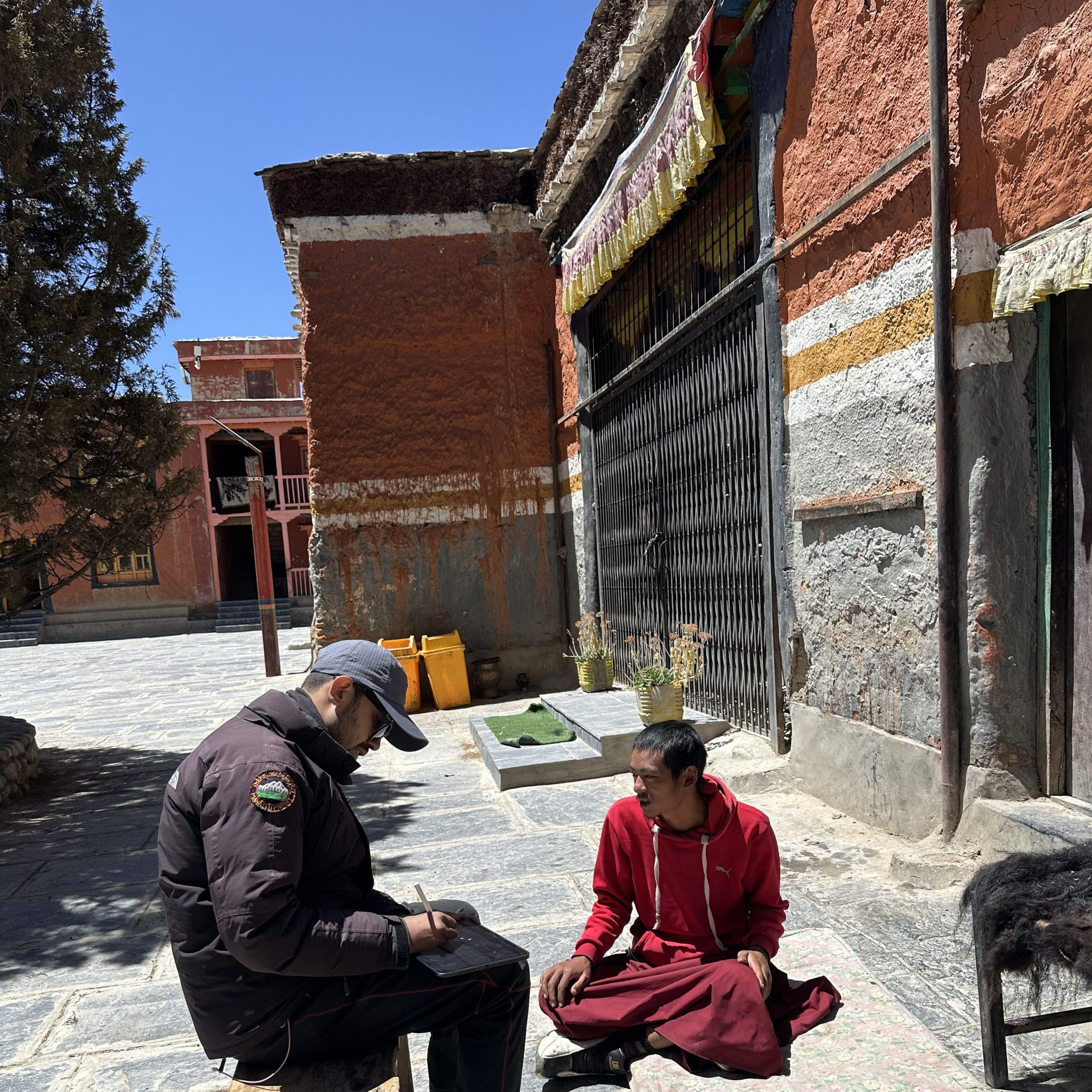
For this reason, policy frameworks in highland Nepal need to move beyond seeing monasteries only as heritage assets in need of conservation funding. They are also pillars of community governance and cultural reproduction. Including monks in climate-related decision-making is not merely symbolic; it is practical. Their involvement can help translate technical knowledge into locally meaningful terms and ensure that adaptation measures are socially grounded.
Holding on to continuity in uncertain times
Preserving monasteries is therefore both a cultural and psychological imperative. In landscapes of growing climatic uncertainty, these institutions serve as stabilising reference points. They help communities process loss and imagine continuity. More responsive policy approaches are needed—ones that recognise monastic institutions as partners in adaptation rather than passive recipients of aid. Only by bridging technocratic planning and local epistemic frameworks can climate resilience in Mustang become truly inclusive and durable.
Author

Sushan Bhattarai is an emerging researcher from the Kathmandu Valley, Nepal, with a B.A. in History and Environmental Studies from Amherst College. He has previously worked at the Smithsonian’s National Museum of Asian Art (NMAA) in Washington, D.C. His research explores the circulation of Trans-Himalayan artistic and architectural styles, with current fieldwork documenting sites linked to the Khas-Malla kingdom across Nepal and India. A recipient of the Saleemul Huq Scholarship for Loss and Damage Research from ALL ACT/IIED, he engages in climate-induced loss and damage research, linking ecological concerns with development and policy, and advancing work at the intersection of climate justice, resilience, and sustainable development. Know more about him at https://lossanddamageobservatory.org/profile/Sushan/NA==