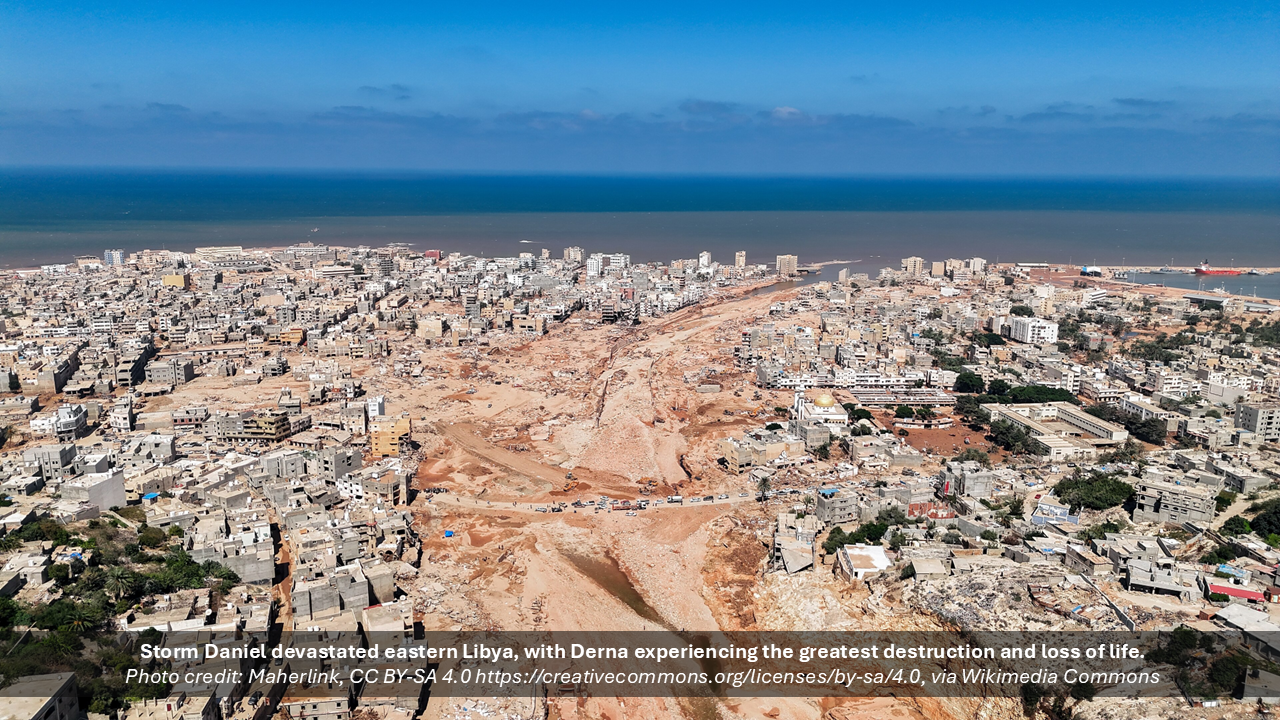
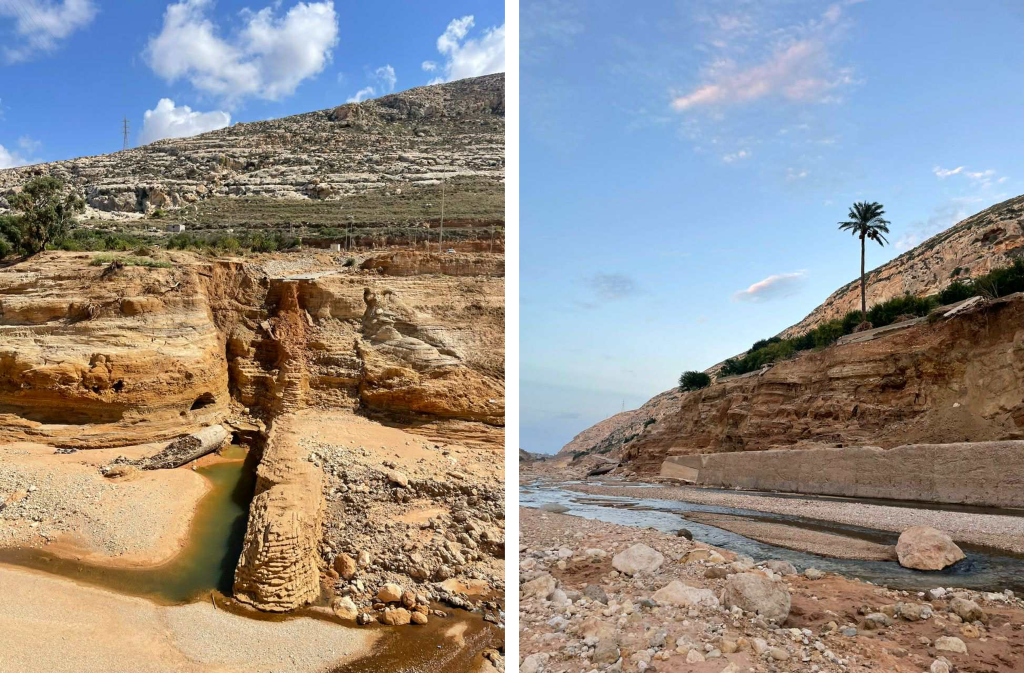
My research journey under the Saleemul Huq Scholarship has been more than an academic experience; it has been a deeply personal process of learning, listening, and reflection. My work focuses on the economic and non-economic dimensions of biodiversity and ecosystem loss in Derna, Libya, especially in the aftermath of Storm Daniel in 2023. As I moved through this research, I found myself thinking not only about environmental loss, but also about what it means to document the lived realities of people and place after disaster.
When a place becomes more than a case study
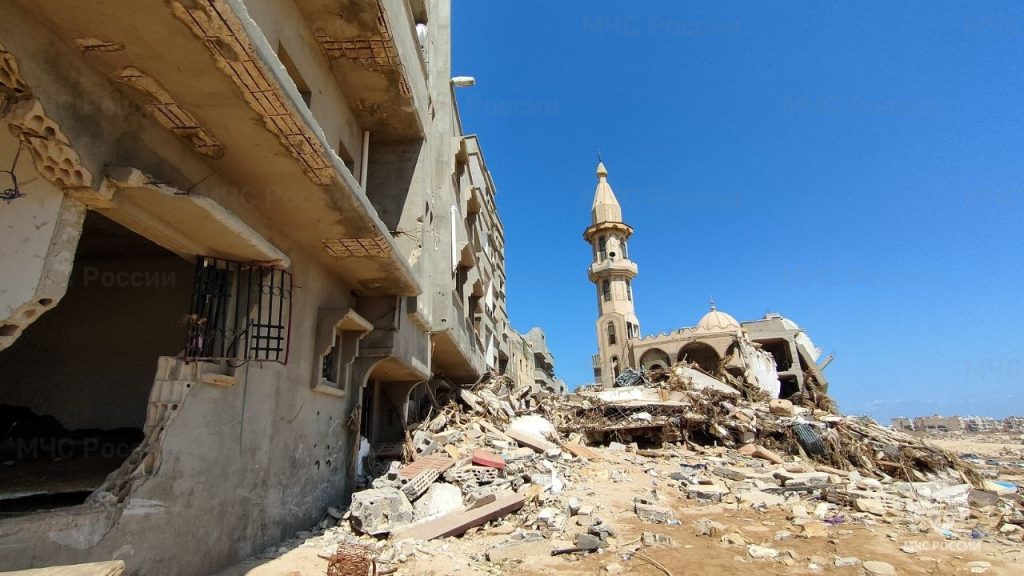
Derna gradually became more than a case study to me. Through this work, I came to better understand how environmental loss, memory, and resilience are deeply connected. Direct communication with local communities helped me see how strongly people in Derna are connected to their environment and how this relationship shapes collective social and cultural experiences.
Researching within Libya’s complex reality
At the same time, conducting research in Libya meant working within a difficult and deeply complex context. Political fragmentation, conflict, and economic constraints continue to shape the country and create serious challenges for researchers. One of the greatest difficulties was the availability of data, as much of the official information in Libya is either outdated or inaccessible. Barriers related to security, geography, and access to target groups made data collection especially demanding, particularly when working alone.
The importance of local support
In this context, the support of The Namaa Organisation for Development and Culture was essential. Because I could not be physically present in Derna, their support enabled me to connect with local communities and understand the extent of loss and damage affecting biodiversity and ecosystems in the area. It also helped me engage with a range of stakeholders, including academics, practitioners, women, and environmental activists.
Beyond data: understanding lived experience
What I learned through this process extended far beyond the data itself. While the research helped me better understand the impact of Storm Daniel on biodiversity and terrestrial ecosystems, it also brought me closer to the human experience of the disaster. I came to see more clearly the emotional and mental burdens people are still carrying, alongside the economic hardships that continue to shape daily life. The destruction in Derna was not limited to infrastructure; it also affected the broader systems that surround and sustain the city.
Learning from local knowledge and capacity
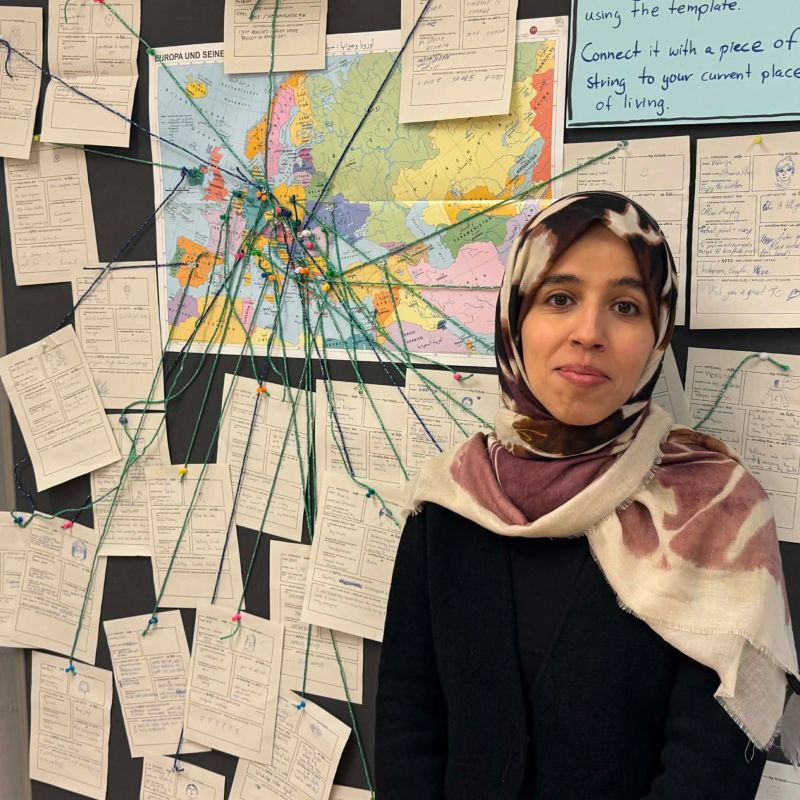
One of the most meaningful lessons from the focus group discussions with academics, engineers, and practitioners in Derna and eastern Libya was the power of local capacity and knowledge in reconstruction and resilience-building. I gained insight into both historical and ongoing local initiatives addressing environmental challenges, and I learned more about the status of biodiversity directly from those working closest to it. At the same time, these conversations made clear that urgent and meaningful action is still needed.
I was especially moved by the dedication of local experts working with farmers and academics to support biodiversity and ecosystems through sustainable practices. Their efforts reflected both commitment and possibility. The discussions showed me how much capacity already exists within the local community, but they also highlighted the need for stronger support and effective policy implementation so that local knowledge and expertise can become part of real solutions.
Asking what research can give back
Throughout this journey, I kept returning to one important question: how can this research meaningfully support affected communities? The process reminded me that research should not only produce findings, but also contribute something of value to the people and places at its centre. This became even clearer in the recommendations shared by participants, who stressed the urgent need to bring attention to Derna’s biodiversity and terrestrial ecosystems.
Reflections on method, trust, and responsibility
This experience also taught me about the limitations of online research and the importance of trust, collaboration, and local partnerships. Through surveys, focus group discussions, and engagement with local voices, I came to better understand both the environmental realities in Derna and the human weight of living through and beyond Storm Daniel.
What stayed with me
What stayed with me most is that research should do more than document loss. It should help amplify overlooked realities, centre local knowledge, and contribute to responses grounded in the needs of affected communities. In Derna, I saw not only destruction, but also resilience, dedication, and a powerful connection between people and their environment.
Looking ahead
This journey reinforced my belief that addressing biodiversity loss and climate-related damage in Libya requires collective effort from communities, researchers, institutions, and policymakers alike. If this work can contribute in any way, I hope it helps bring greater attention to the voices, ecosystems, and urgent needs that too often remain overlooked.
Author
Malak Altaeb is an independent consultant, blogger, and researcher from Libya, currently based in Paris, France. She has a master’s degree in environmental policy from Sciences Po University in Paris and a bachelor’s degree in chemical engineering from Tripoli, Libya. She is a senior expert on sustainable resource management and climate resilience at the Climate and Water Initiative (CWI). She is a former ecological security fellow at the Center for Climate and Security of the Strategic Risks Institute and a former non-resident fellow with the Tahrir Institute for Middle East Policy (TIMEP). Her work focuses on environmental policy, the water-food nexus, conflict, and climate across Libya, Tunisia, Egypt, and the Gulf. She researched biodiversity loss and environmental damage in Derna, Libya, following Storm Daniel, supported by the Saleemul Huq Scholarship from ALL ACT/IIED. Read more about her at https://lossanddamageobservatory.org/profile/Malak/Nw==
What an incredible piece of work! You managed to perfectly capture the intersection of Libya’s complex research landscape and Derna’s urgent environmental priorities. It’s inspiring to see someone with your expertise bridge the gap between science and sincere community engagement. I applaud your courage in facing the challenges of data scarcity and working under such complex circumstances.