When we arrived in Dagana, Bhutan, we came as researchers carrying the usual tools of our trade: surveys, recorders, questionnaires, and the quiet assumption that loss could be measured.
We were not prepared for what we encountered.
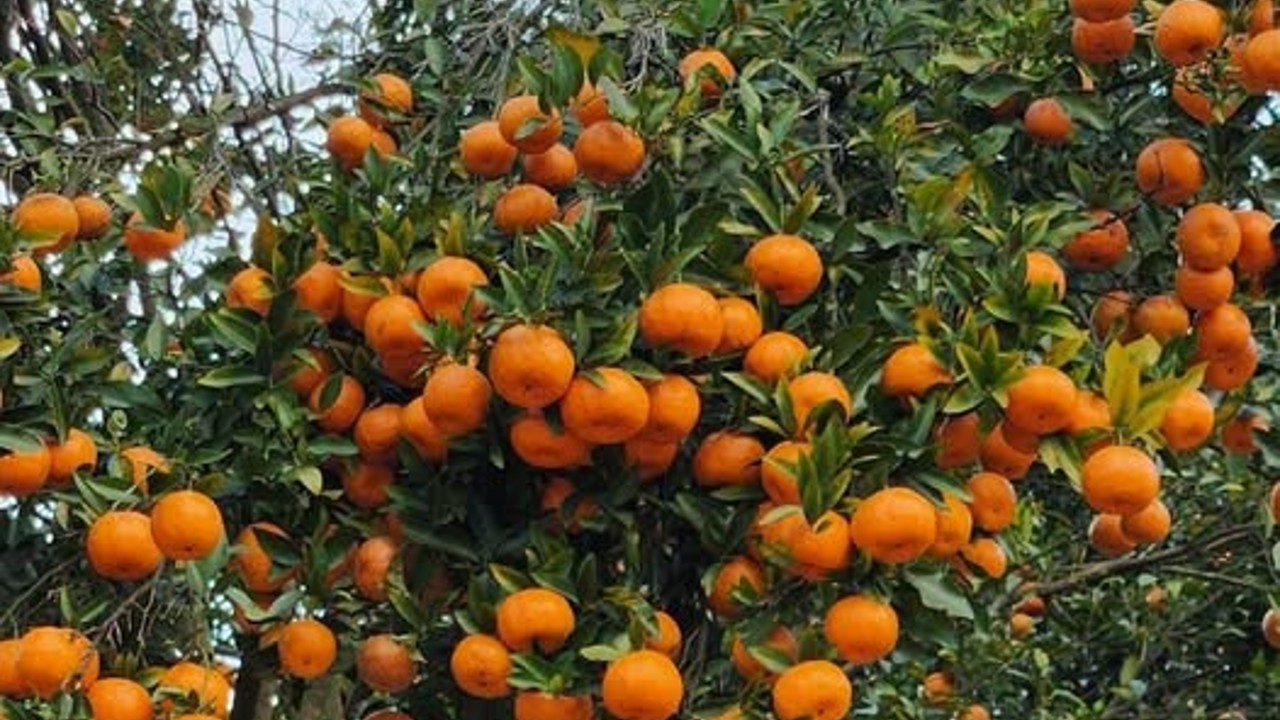
One of the first images that stayed with us was an orange orchard full of dried branches and shrunken fruit. A farmer stood among trees that had once sustained his family and told us, with the exhaustion of someone who had repeated this too many times, that the earnings from twenty acres had fallen to nothing. These were not just oranges for sale in a market. They had once paid school fees, fed families, and brought neighbours together during harvest season. Even after some farmers shifted to drought-tolerant areca nut, they told us they had never earned as much as oranges once did. They did not speak in the language of economic models or diversification strategies. They pointed to the orchard and said, “This is what is left.”
That moment became an early lesson for us. What was disappearing in Dagana was not only income. It was also a way of life.
The loss of orange harvests meant the loss of annual gatherings, of children running between trees, of elders telling stories while everyone picked fruit together and returned home with stained fingers and full baskets. Economics can tell us how to calculate substitution and compensation, but it cannot tell us how to replace the smell of orange blossoms that once announced a reliable season, or the taste of fruit grown on land cleared by grandparents. In Dagana, loss did not feel numerical. It felt lived.
Learning to listen differently
As the days passed, the field kept asking us to listen differently.
In Norbuzingkha, several farmers told us that much of their family’s food is now purchased rather than grown at home. At first, that sounded like a simple shift in livelihood. But then one woman told us about a time when her school-age child became seriously ill, and a bridge washed out by flash flooding delayed their journey to the hospital in Karmaling. “We almost lost her,” she said quietly.
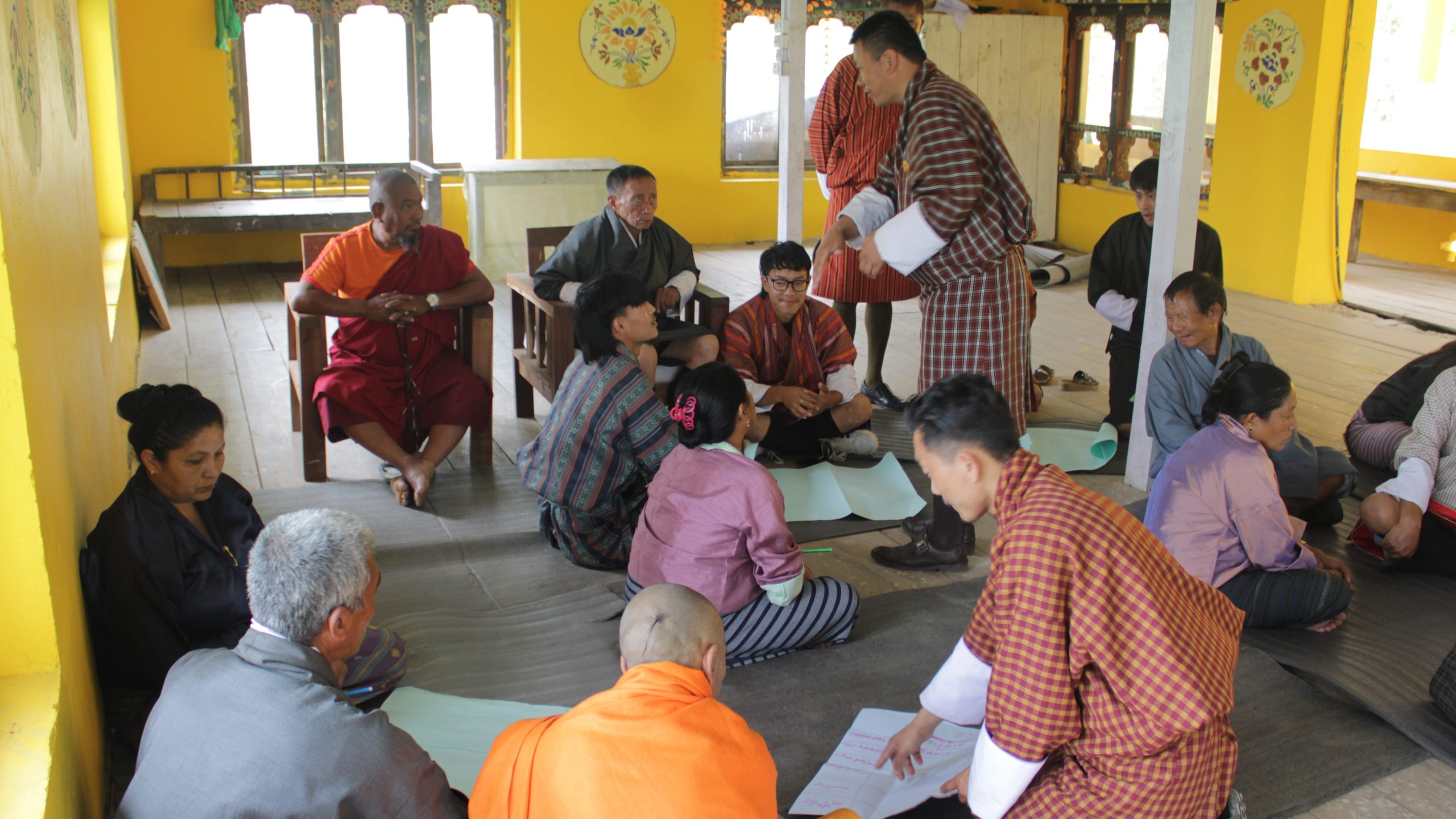
That was another lesson. Climate damage is not only crop loss or falling yields. It is also the washed-out bridge that delays emergency care, the monsoon that arrives too early or too late, the road that no longer connects. These are not abstract “non-market impacts.” They are part of the texture of daily life when the climate becomes unreliable.
By the end of our first week, it was clear to us that the people of Dagana were teaching us a different language of loss—one spoken through broken relationships, forgotten tastes, interrupted rituals, and prayers that no longer seem to reach where they once did.
Ritual, memory, and spiritual distress
Some of our most powerful encounters were about ritual, memory, and spiritual distress.
In Lhamoizingkha, we met an elder who still keeps seed baskets in an empty seed storehouse. The cereal crops no longer grow because the rains no longer come when they should, and the heat has made fieldwork harder to endure. That empty basket said more than any statistic could. It held the memory of crops that have disappeared so completely that future generations may know only their names, not their taste.
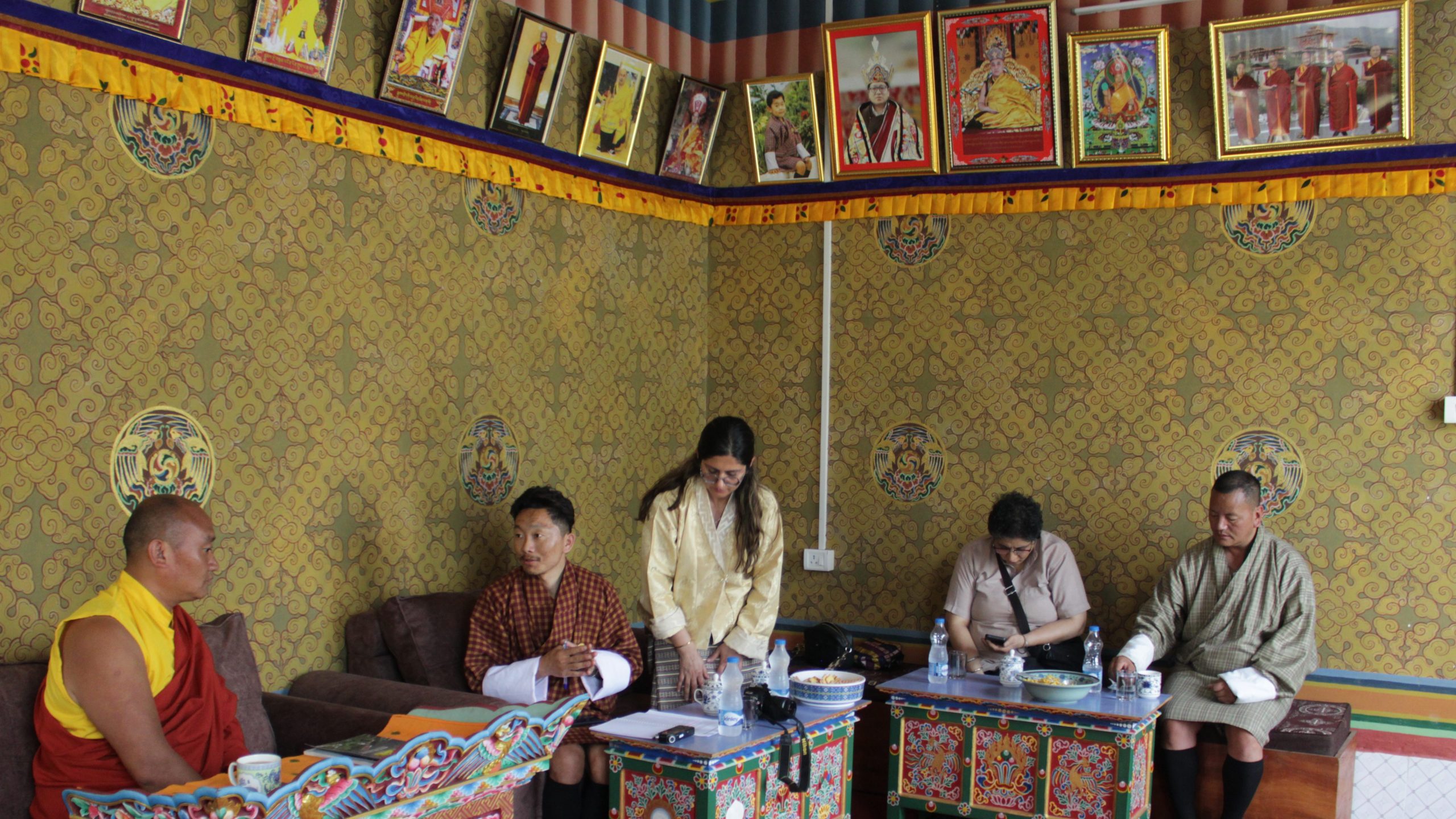
Again and again, we found ourselves reflecting on what standard measures fail to capture. People are not simply adapting from one commodity to another. Something deeper is being lost.
One elder told us that his grandchildren do not know the taste of millet flour or the story of why millet beer is offered to the local deity, because millet has not been grown in their village in their lifetime. That is more than an agricultural change. It is a break in intergenerational memory.
Witnessing loss with humility
As researchers from outside the community, we often asked ourselves difficult questions. Were people performing grief differently for us? What remained unsaid? What forms of silence were acts of protection, and what forms reflected deeper rupture? We realised that careful analysis mattered, but so did humility. Neither on its own was enough.
Our interdisciplinary backgrounds also made us more aware of our own role as witnesses. Over time, we began to read dried orange trees and vanished crops not only as evidence of environmental change, but as stories in themselves. Farmers were not only mourning. They were also teaching us how to understand loss as knowledge.
When rituals continue in altered form
This became especially clear when we learned how rituals continue, but in altered form. Across villages such as Lhamoizingkha, Samarchu, Tsendagang, Karmaling, Norbuzingkha, and Semchumtahng, people told us that animal sacrifice has been discontinued and that purchased goods increasingly replace homegrown offerings. A local lama explained that traditional grains are being substituted with market commodities. Communities are adapting, yes, but many people feel these substitutions lack spiritual depth.
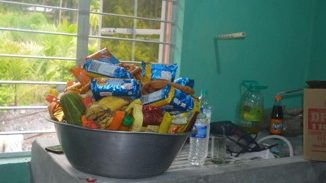
One farmer asked us, “Have we angered our local gods? Our rituals didn’t prevent the calamity.”
We did not hear this as a rejection of faith. We heard it as distress within faith—a profound spiritual uncertainty that current adaptation policy has little language for. Policy is often designed around material substitution. It rarely knows how to respond when what is breaking is a relationship between people, place, and the divine.
How loss is felt across gender and generation
We also became aware of how differently this loss is experienced across gender and generation.
While working with women during ginger planting in Samarchu, we heard their grief over the disappearance of ritual crops once grown and offered by their mothers. These crops connected them not only to the land but to ancestors. Male elders, meanwhile, spoke of labour shortages and the humiliation of having to hire migrant workers from across the Indian border. One educated farmer described the collapse of the orange market and the pain of having land his children no longer wanted. A teenager preparing to move to the capital told us bluntly that he saw little reason to learn farming techniques or complex rituals he did not expect to use.
These conversations made something very clear to us: loss is not a single category. It is not even evenly distributed within one village. It settles differently on women and men, on elders and youth, on those who stay and those preparing to leave.
Beyond data: a different kind of rupture
By the time we left Dagana, our notebooks were full of observations that resisted easy summary.
Yes, many households reported climate-related crop losses, loss of farming income, and disruptions to festivals and spiritual practices. Those patterns matter. But they still do not fully capture what we witnessed. We remember, for example, a grandmother explaining that the Ubhauli Puja, a harvest thanksgiving ritual, was not held after a devastating flood because the crops were gone and villagers were busy rebuilding their homes. That was not just a cancelled event. It was a rupture in cyclical time, a break in the chain of obligations among humans, the land, and the deities.
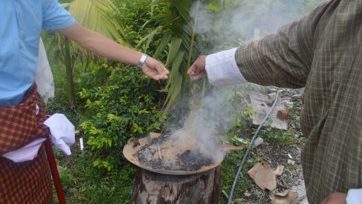
When another elder said, “The monsoon has forgotten its promise,” she was not describing a data trend. She was describing a broken relationship.
This, perhaps, is what stayed with us most. Climate loss in Dagana is not only economic. It is also ontological. It unsettles the basic sense of how the world is supposed to be.
The limits of the adaptation policy
Our fieldwork also sharpened our view of adaptation policy. Government support—seeds, fertilisers, plastic sheets, irrigation, check dams, cash, and rice assistance—does matter. Many farmers spoke with gratitude about these forms of help. But they also repeated a quieter truth: such interventions do not address the deeper disorientation people feel.
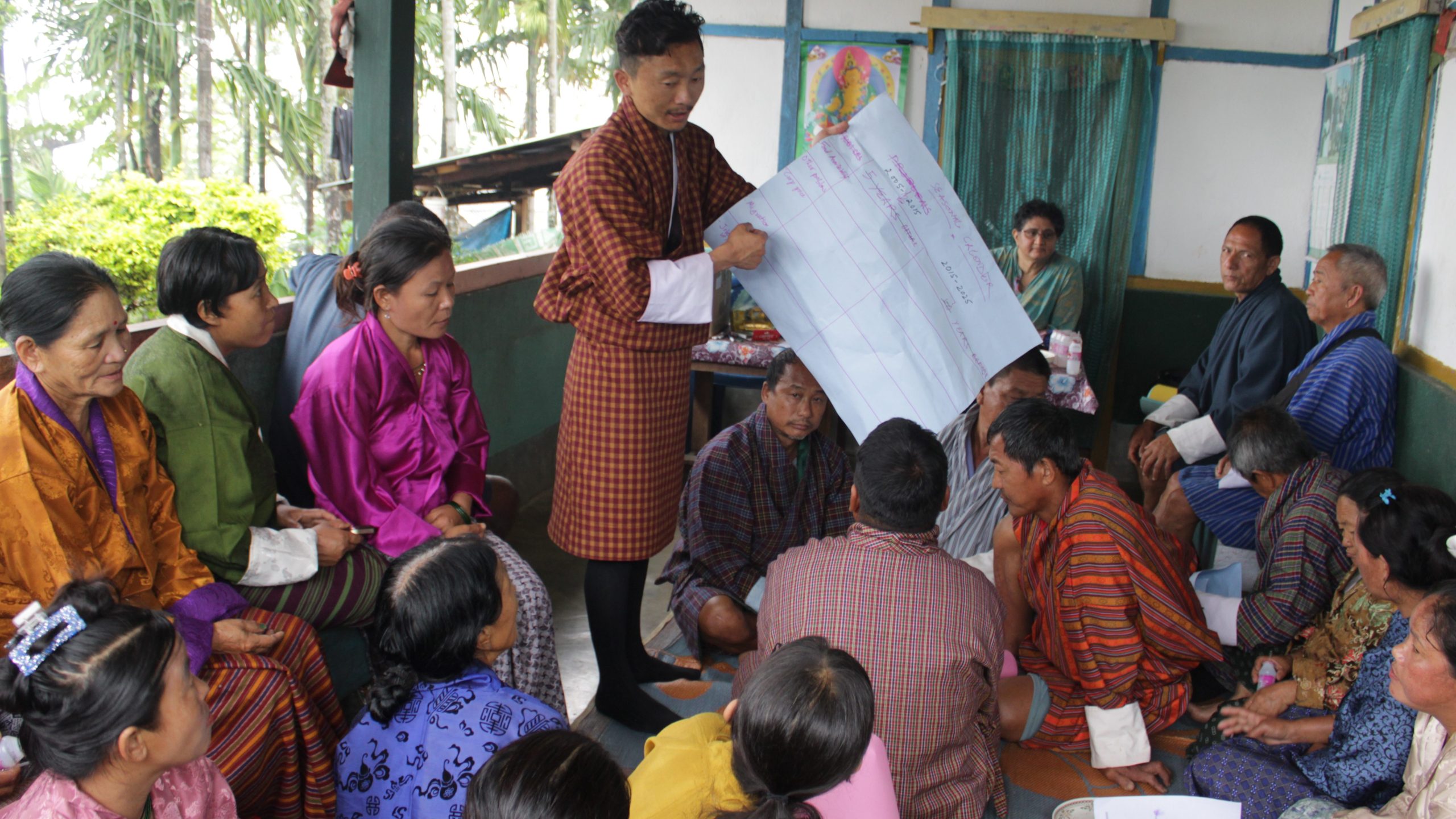
No policy addresses the farmer who wonders whether his family has angered the local gods. No early warning system accounts for the pain of seeing a sacred grove washed away. At the same time, mutual help within communities remains deeply important. Neighbours still rebuild houses together and share food after disasters. Yet repeated crop failures and youth outmigration are weakening those support systems. In one village, a farmer showed us a government-provided electric fence and explained that the collective labour his village once relied on could no longer be organised. Technology was arriving even as social cohesion was fraying.
That tension felt important. It reminded us that adaptation cannot be reduced to infrastructure alone.
What communities are really asking for
The proposals communities shared with us were practical: strengthen cultural and religious coping mechanisms, create village-level emergency relief funds, and improve early warning systems. But beneath these suggestions was something more fundamental. People were asking to be understood on their own terms.
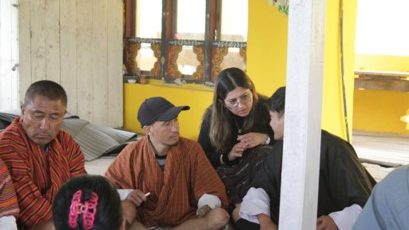
Loss, in Dagana, is not only the orange that no longer grows or the income that no longer comes. It is also the story that will never be told to a grandchild, the ritual that cannot be performed because the ingredients no longer exist, the laughter once shared in a home now swept away by floodwaters.
The farmer who showed us his dried orange trees was not only showing us failed production. He was asking us to remember.
And remembering, we came to feel, is itself a form of resilience.
Returning with a different understanding
When we returned from Dagana, we were no longer only searching archives for continuity. We were also listening for rupture—for what is no longer said because the conditions that once made it meaningful have disappeared. We often thought about what people tell researchers and what remains behind after we leave: the grief carried into kitchens, fields, temples, and quiet household conversations we never fully hear.
What Dagana taught us is simple but difficult to hold on to in policy spaces: adaptation without cultural integrity is not adaptation at all.
The meaning of loss exceeds modern economic logic not because economics is irrelevant, but because it is incomplete. Economics can measure what can be replaced. It cannot measure what is irreplaceable: the taste of millet flour, the sound of prayers offered with homegrown grains, the trust that the monsoon will remember its promise.
Remembering what cannot be replaced
The people of Dagana are not passive victims. They pray, adapt, substitute, mourn, and replant. But they also remember. And in telling their stories, they ask something of those who listen.
Our responsibility now is to ensure those stories do not remain at the margins of climate policy. They should be central to how we understand loss, resilience, and what it means to live through a changing climate.
The loss we witnessed in Dagana still stays with us—not only as evidence, but as an obligation: to speak of what cannot be measured and to remember what cannot be replaced.
Authors
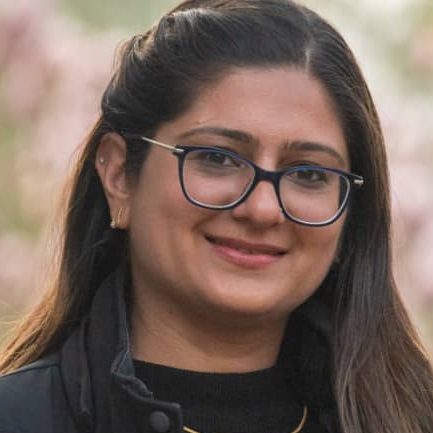
Rupali Sehgal is a Senior Lecturer at Royal Thimphu College, Bhutan, and formerly served as a Research Associate at the Indian Institute of Mass Communication, New Delhi. She holds a PhD and MPhil in Media Studies, as well as an MA in Sociology, from Jawaharlal Nehru University. Her research is situated at the intersection of food, culture, media, and climate discourse, with particular emphasis on how language and representation shape knowledge production, cultural identity, and public understandings of food across media platforms. As part of the Saleemul Huq Scholarship, she has also conducted research on food culture, contributing interdisciplinary perspectives on food, environment, and climate-change-induced loss and damage. Read more about Rupali Sehgal.
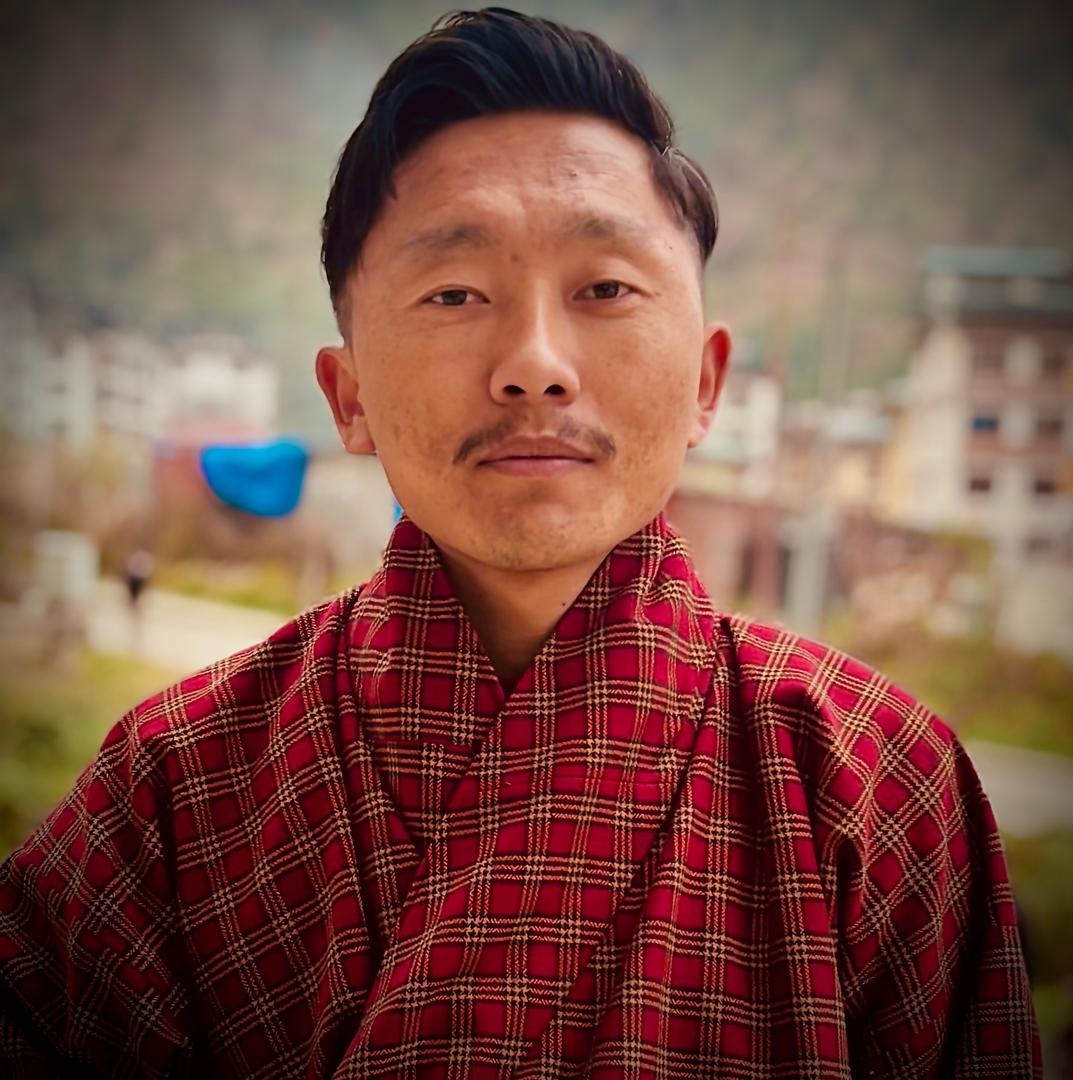
Chencho Dorji is a Lecturer in the Social Sciences Program at Royal Thimphu College, Bhutan, with academic and research interests in environmental humanities, indigenous cultural studies, intangible cultural heritage, and Buddhist art history. He holds a Master’s degree in Historical Studies from Nalanda University and has been engaged in interdisciplinary research projects, including non-human and human relationships, the Highland Heritage Project, and studies on climate-induced cultural heritage loss. He has received the Saleemul Huq Memorial Scholarship, Research Development Grant fellowship, and Himalayan University Consortium fellowship for his research contributions. His work combines ethnographic approaches, historical analysis, and community-based research to explore the relationships between culture, environment, and society in Bhutan.