I came across an advert for the Saleemul Huq Memorial Scholarship, which was seeking scholars and researchers to study loss and damage. After checking the requirements and seeing that my work on biodiversity fit well, I applied. By the favour of God, I received the scholarship. This gave me a chance to study a gap I had noticed and to share my findings and policy ideas to help protect biodiversity. When I started my research on climate-driven biodiversity loss and its effects on communities near the Kakamega Forest in western Kenya, I believed I understood the issue.
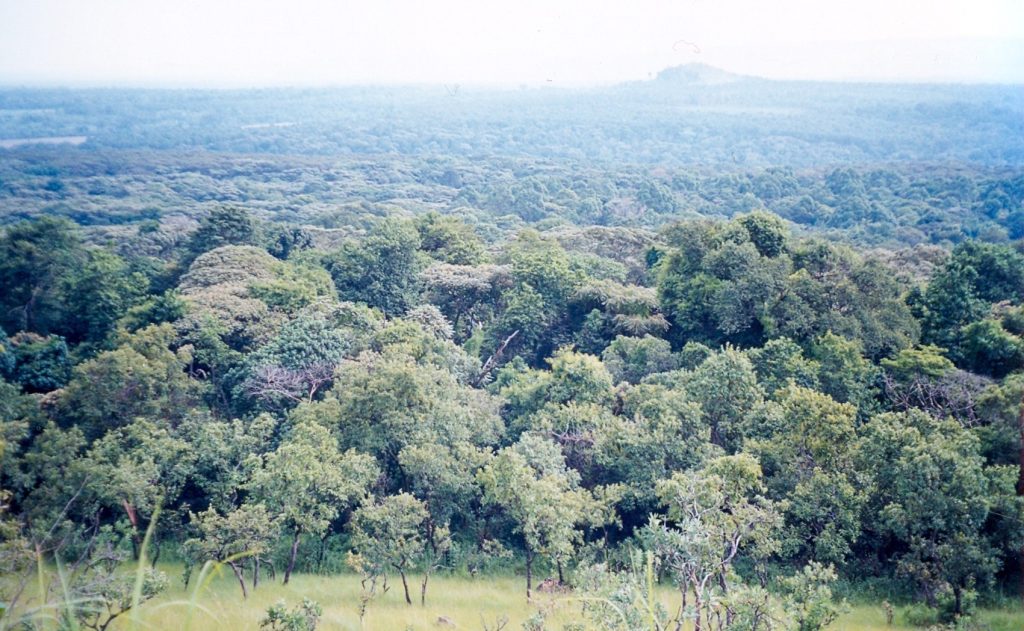
As an environmental scientist and conservation practitioner, I have spent years studying forests, especially tropical rainforests, with a focus on biodiversity, ecosystem services, restoration, and climate change. Like many others, I started this project with a simple assumption: climate change and forest degradation were reducing biodiversity, which then affected livelihoods, ecosystem services, and local resilience. Before collecting data, I expected the study would mostly record ecological changes and their economic impacts. But I soon realised I was mistaken. The mentorship and training before fieldwork showed me that I needed to change how I thought and worked. This shift became even clearer once I started working in the field.
The research foundation helped me better understand that biodiversity loss is not solely an environmental problem. It is also a social, cultural, governance, and knowledge issue, and above all, a human issue. This research changed how I see climate-induced loss and damage.
Beginning with the forest
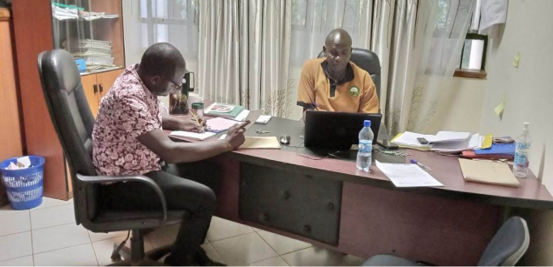
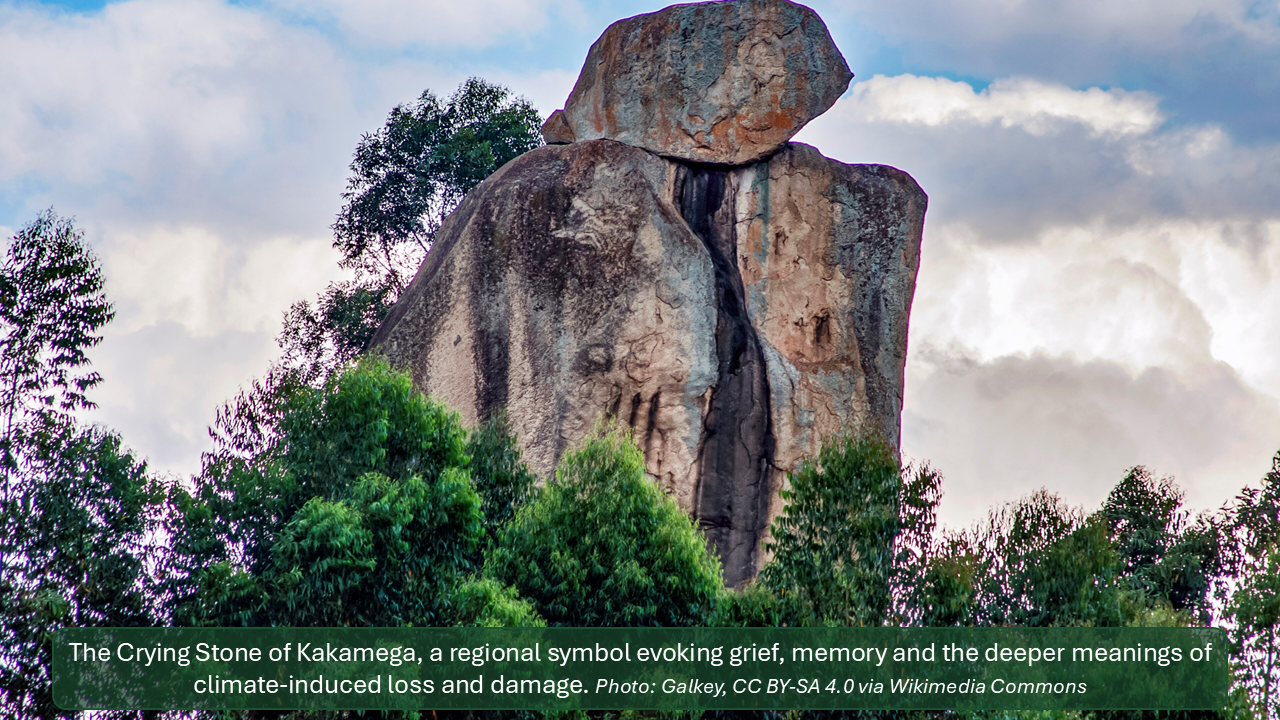
We carried out the study in nine villages adjacent to the Kakamega and Kibiri Forest blocks, which are among the last remnants of the Guineo-Congolian rainforest in East Africa. For generations, local communities, primarily the Luhya people of Kenya, have relied on these forests for water, firewood, medicinal plants, cultural practices, food, and livelihoods.
At first, we aimed to understand how climate-driven extreme events and forest degradation were affecting biodiversity and what these changes meant for local communities. We used household surveys, focus group discussions, and interviews with community members, forest managers, local leaders, and conservation workers. We examined both economic and non-economic losses associated with climate change and biodiversity loss. As in many field studies, we started with a set of indicators and research questions, but soon found they were not enough to capture the full complexity of the changes.
The turning point: Rethinking what we measure
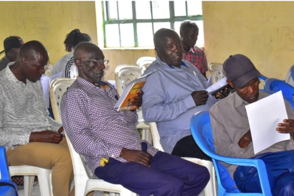
A key moment happened during a focus group in Kibiri Forest. While we talked about changes in rainfall and the environment, an elderly participant paused and said, “We used to know when the rains were coming by watching the birds and the flowering trees. Today, the signs no longer speak to us.” What seemed like a simple comment about the weather actually pointed to something much deeper: the slow loss of a centuries-old bond between people and nature, where ecological knowledge, cultural identity, and care for the environment were closely linked.
This relationship was built over generations through observation, experience, culture, and adaptation. As researchers, we often measure climate impacts by examining crop yields, household incomes, livestock losses, or changes in forest cover. These are important, but they only show part of the picture. The elder was talking about the loss of traditional ecological knowledge—the wisdom that helps communities understand their environment and adapt. By the end of our study, we found that about 61 per cent of youth-led households could not explain the seasonal or biodiversity patterns that older generations once used for decision-making. This was more than just a knowledge gap; it showed the slow loss of a cultural asset built over centuries.
Learning to listen beyond the survey tool
Researchers often come into communities with questionnaires, tablets, and detailed methods. We look for statistically significant results and measurable outcomes. But some of the most important insights from this study came when we stopped asking questions and just listened. Community members often spoke of sacred forests, traditional gathering places, initiation sites, cultural ceremonies, and spiritual ties to specific species and landscapes. At first, I thought these stories were extra information. Over time, I came to see they were key to understanding climate-related loss and damage. One finding stood out: in Kibiri, many people said sacred forest spaces and traditional gathering sites were disappearing. Cultural ceremonies that once connected generations to the forest were becoming harder to keep as the landscapes changed.
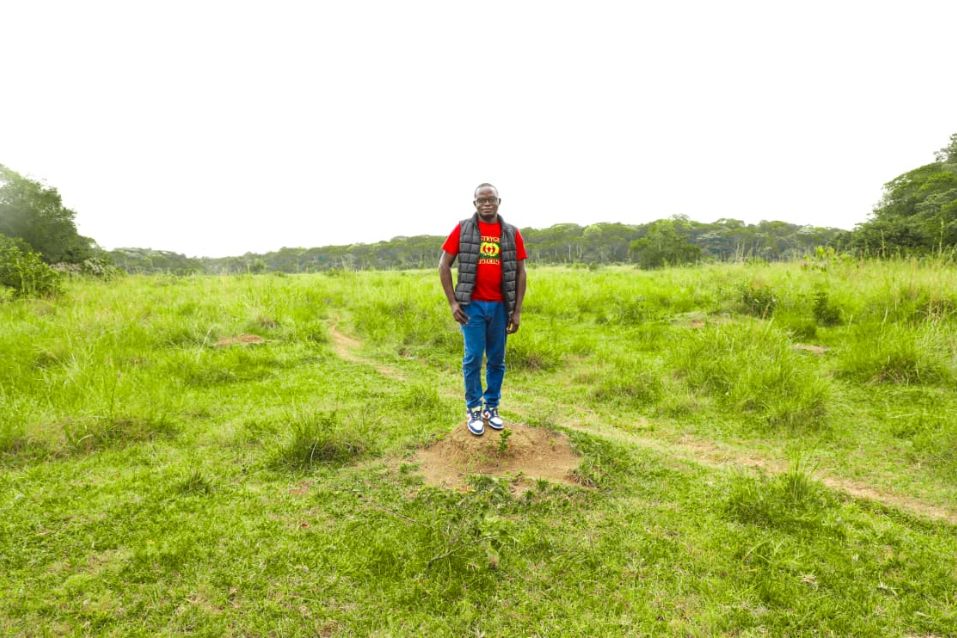
These losses cannot be measured in money. No economic framework can truly show what it means for a community to lose a sacred grove, a ceremonial space, or a cultural practice tied to a vanishing ecosystem. This made me question my own ideas about what counts as evidence. Too often, researchers focus on what can be counted instead of what really matters. My fieldwork reminded me that some of the most important climate impacts are not in data tables, they are in stories, memories, identities, and lived experiences. That is the main lesson from this work.
Research ethics is more than consent forms
Before starting fieldwork, we followed standard research steps. Participants gave informed consent, we implemented confidentiality measures, and we obtained ethical approval. But I learned that ethical research goes far beyond just following rules. The study looked at loss, identity, culture, and uncertainty about the future. Talking about disappearing traditions, shrinking forests, and declining livelihoods can be very emotional, and the research needed to reflect that.
Sometimes, participants did not want to talk about cultural losses because these topics involved sacred traditions and community identity. Building trust took patience, respect, and sensitivity. I learned that ethical practice is not just about protecting participants, it is also about respecting their knowledge. Communities are not just sources of data; they have expertise, lived experience, and solutions. This view changed how I conducted interviews and discussions, and how I interpreted findings. Instead of seeing communities as just respondents, I began to see them as co-creators of knowledge.
The challenge of measuring the unmeasurable
One of the greatest challenges was measuring non-economic losses. While we can count crop declines, income losses, and water shortages, it is much harder to measure the loss of cultural identity, traditional knowledge, or spiritual ties to the forest. This challenge made us see loss and damage in a broader way. Climate-driven biodiversity loss affects not just livelihoods and ecosystem services, but also culture, social bonds, indigenous knowledge, and mental well-being. This experience showed the value of using both numbers and stories: numbers show the extent of the loss, but stories help us understand what that loss really means. That is the main insight of this study.
What the communities taught me about resilience
Before this project, I often saw resilience in technical terms, like adaptive capacity, climate-smart farming, early warning systems, and restoration projects. These are still important, but the communities near Kakamega Forest showed me that resilience is much more. Even with declining biodiversity, changing rainfall, forest loss, and economic challenges, people were adapting by starting tree nurseries, restoring forests, keeping bees, practising agroforestry, harvesting rainwater, and conserving medicinal plants. These experiences taught me that resilience comes not just from infrastructure and technology but also from social networks, collaboration, local leadership, and hope. These communities are not just victims of climate change—they are active agents of change, drawing strength from their knowledge, institutions, and cultural values.
If I were starting again
If I could start this project again, I would spend less time creating indicators and more time learning about the connections between people and forests, culture and biodiversity, and knowledge and adaptation. I would focus on recording indigenous and local knowledge from the start, involve communities earlier in the research process, and pay more attention to non-economic losses before making survey tools. Most importantly, I would understand from the beginning that climate-driven biodiversity loss is not just about losing species—it is about changes in livelihoods, cultures, identities, and ways of life. That is the lesson I would take into any future work.
A final reflection for researchers, practitioners, and policymakers
The main lesson from this research is that when biodiversity declines, communities lose much more than just species, habitats, or ecosystem services. They lose memories, knowledge systems, cultural identities, and connections built over generations. Sometimes, they lose parts of their history; other times, they lose chances for the future. For policymakers, this means climate adaptation should go beyond infrastructure and economic recovery, also to protect cultural heritage, indigenous knowledge, social bonds, and community institutions. For practitioners, it shows the need to see local communities as active partners, not just passive recipients, because their knowledge and experience are key to building resilience. For researchers, it means looking at evidence more broadly, giving equal weight to non-economic losses as well as measurable economic impacts. Climate-driven biodiversity loss is often seen as just an environmental crisis. But after months of listening to people living near Kakamega Forest, I see it differently. At its heart, it is a human story about people, place, identity, and belonging. If we do not listen to these stories, we risk missing some of the deepest and most lasting losses happening in a changing climate.
Author
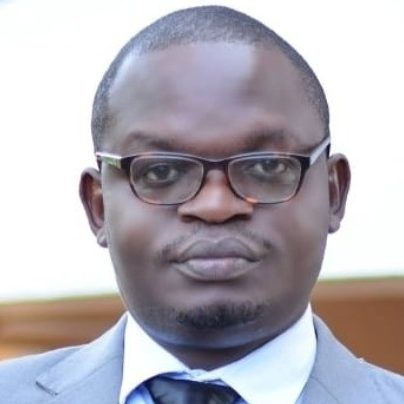
Dr Humphrey Agevi is a climate–health scientist specialising in climate resilience, ecosystem restoration, and nature-based solutions in Africa. He serves as Program Coordinator for the Eastern and Southern Africa Hub for Climate Change and Health at Amref Health Africa and contributes to global environmental policy as an IPCC AR7 Working Group III Expert and UNEP GEO-7 Outlook Reviewer. With over a decade of experience in research, policy engagement, and multi-sector partnerships, his work bridges data, AI, and practice to strengthen climate-resilient health systems, advance evidence-informed decision-making, and promote equitable, sustainable development across the continent. Know more about Dr Humphrey Agevi