From December 2024 to January 2025, I conducted fieldwork in Mongolia through the Saleemul Huq Memorial Scholarship and Award for Loss and Damage Research, offered by ALL ACT/IIED in London. My research focused on the non-material loss and damage associated with dzud among nomadic herder communities in Töv Province.
Dzud (зуд in Mongolian) is a recurring climatic hazard across the Central Asian plateau. It is marked by extreme cold, heavy snow or ice, and strong winds that prevent animals from grazing, often leading to widespread livestock deaths. When a dzud follows a drought, its effects become even more severe. Historically, dzud occurred every six to ten years, but climate change has increased both its frequency and intensity. Mongolia has experienced more than 15 dzud events in the last three decades. In many ways, today’s herders belong to a “dzud generation”, living through repeated cycles of environmental stress.
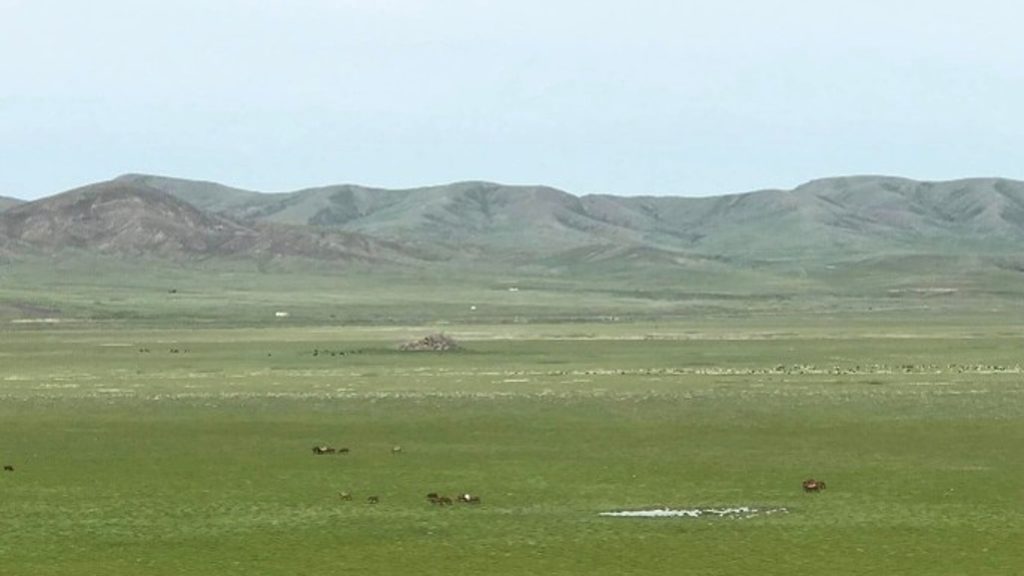
Growing up on the Mongolian steppe, I learned that winter is not simply a season. It is a test of endurance, memory, and resilience. That experience, together with my training as a geographer and field researcher, shaped my commitment to studying climate change and pastoral life. Yet, like many researchers, I conducted much of my earlier fieldwork in the summer because it was easier to organise. On this trip, I was struck by how much that seasonal bias matters. Dzud is a winter phenomenon, but it is often studied outside the conditions in which it is actually experienced.
When winter turned personal
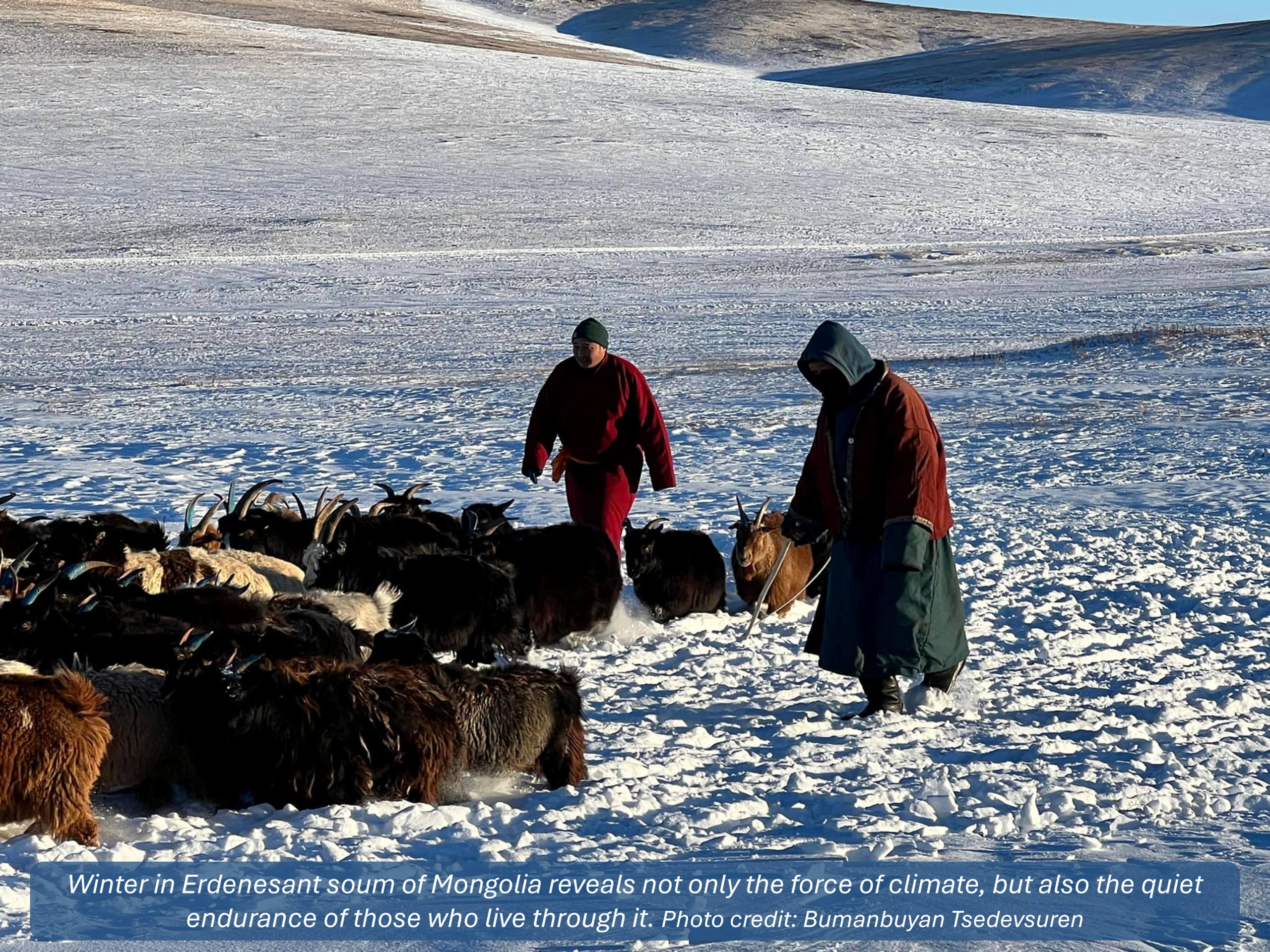
In November 2023, while I was preparing for summer fieldwork, I received devastating news from my home in Erdenesant soum, Töv Province. An unexpected snowstorm caused fatalities—something people said had not happened there for at least three generations. The shock raised urgent questions for me about causation, preparedness, and prevention. At the same time, herders were entering one of the harshest winters in recent memory. One senior herder described it as the beginning of an “iron-clad dzud”, when layers of ice form over snow and prevent livestock from reaching pasture.
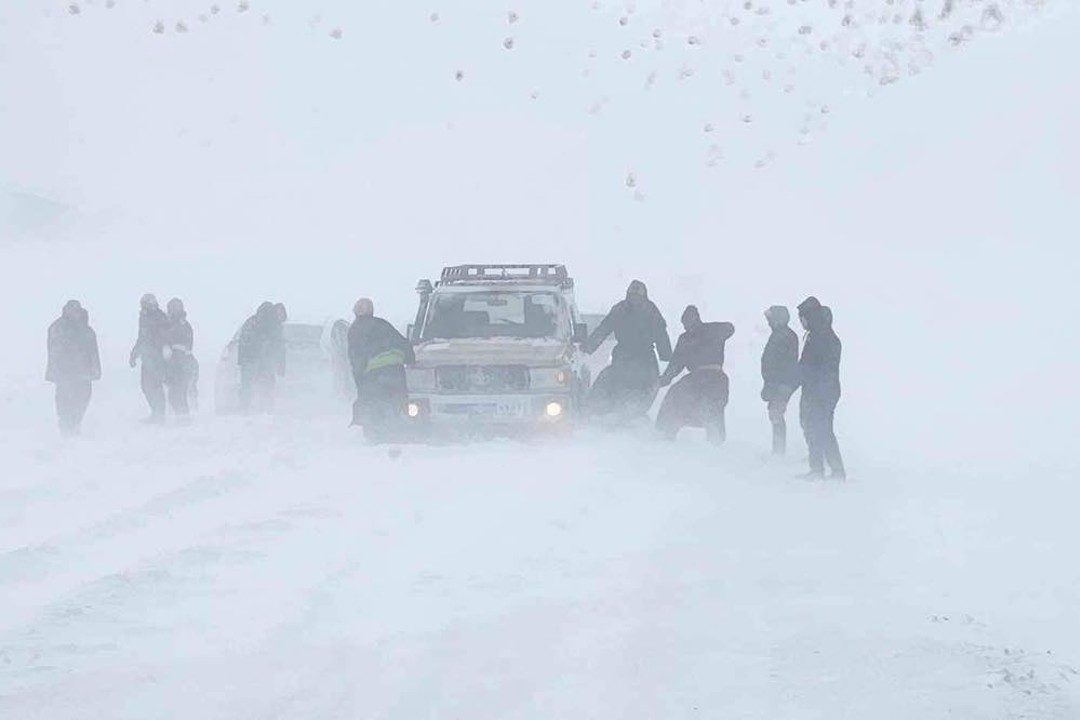
I returned to conduct fieldwork a year later, when memories of that winter were still fresh. Working in my home region brought both advantages and emotional weight. Because I was familiar with local livelihoods, customs, and social networks, it was easier to build trust and have open conversations. But that same closeness also made the work harder. Some people told me they had lost most, or even all, of their livestock after consecutive harsh winters. Others spoke about debt, uncertainty, and moving to urban areas after losing the livelihoods that had sustained them. Listening to these stories in communities I feel deeply connected to made the research intensely personal.
What winter fieldwork revealed
The physical conditions of the fieldwork were also demanding. Temperatures dropped to nearly minus 25°C, and the cold shaped every aspect of the research process. At first, many of my conversations focused on livestock deaths and the economic losses people had suffered. But over time, I realised that the impacts of dzud go far beyond material damage. They are tied to identity, cultural continuity, and relationships with land.
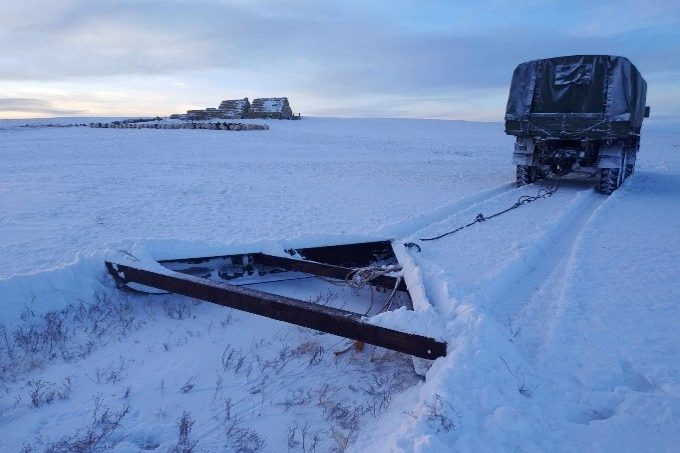
In Mongolia, livestock are not only economic assets. They are central to everyday life. They provide food, income, mobility, and social standing. They also carry labour, memory, knowledge, and intergenerational continuity. Losing them means more than financial hardship. It can mean losing independence and weakening the ability to continue a nomadic way of life.
Even though I had prepared through training, summer field trips, and previous publications on climate adaptation, disaster risk, and pastoral resilience, nothing fully prepared me for winter fieldwork itself. Plans had to change constantly. Sometimes it was impossible to reach families for meetings. These disruptions were not just obstacles to research; they were insights into the everyday realities herders face, often with few alternatives.
Letting the research follow the rhythm of life
The experience reminded me that methodological flexibility is not optional in remote, climate-affected settings. Standardised research designs are difficult to maintain when people’s priorities are necessarily elsewhere—searching for lost livestock, finding fodder, or responding to animal health emergencies. I had to let the research adapt to the rhythms of pastoral life rather than forcing pastoral life to fit my research schedule.
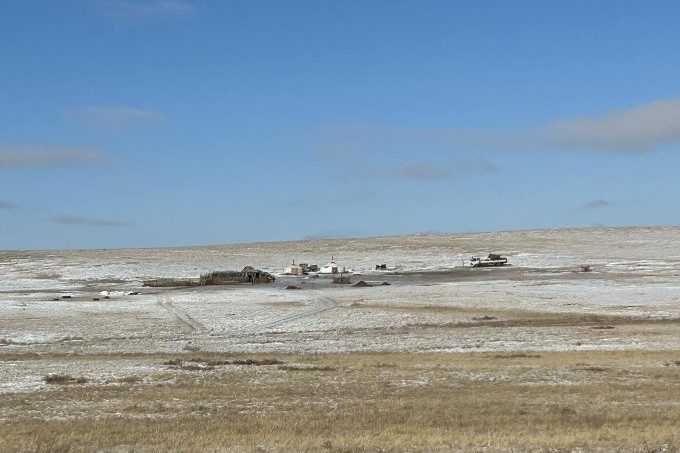
This fieldwork also made me think more deeply about how unevenly climate change is experienced. Global discussions often speak about climate change through future scenarios and policy frameworks. But for Mongolian herders, climate change is not an abstract future. It is a present and intensifying reality. Unpredictable weather, degraded pasture, and more frequent extreme events are already shaping the viability of livelihoods. Dzud itself is not new, but its effects are made worse by shorter recovery times and the cumulative burden of repeated shocks.
The emotional weight of loss
One of the strongest themes that emerged from my conversations was the emotional dimension of loss. Livestock mortality is usually presented through numbers and aggregate statistics, but those figures cannot capture what it feels like to live through such loss. Herders described watching animals die as witnessing the slow disappearance of years of labour. Some spoke about the silence that follows the loss of a herd—the missing sounds, movement, and daily routines that once structured life.
These moments reminded me that research is not only about collecting data. It is also about listening carefully and responsibly. Some of the most meaningful insights came not during formal interviews, but during informal conversations inside gers, often while snowstorms continued outside. Those conversations revealed a more complex picture of pastoral resilience. Herders adapt through mobility, cooperation, traditional forecasting, and resource sharing. But these strategies are not limitless, especially as climate shocks become more frequent and severe.
What this fieldwork changed in me
Conducting research in these conditions was physically exhausting, emotionally heavy, and intellectually demanding. Yet it also deepened my understanding of climate vulnerability in ways that reading and theory alone never could. This fieldwork was not just an academic exercise. It was also a process of reconnecting with place, community, and the lived realities behind the concepts I use in research.
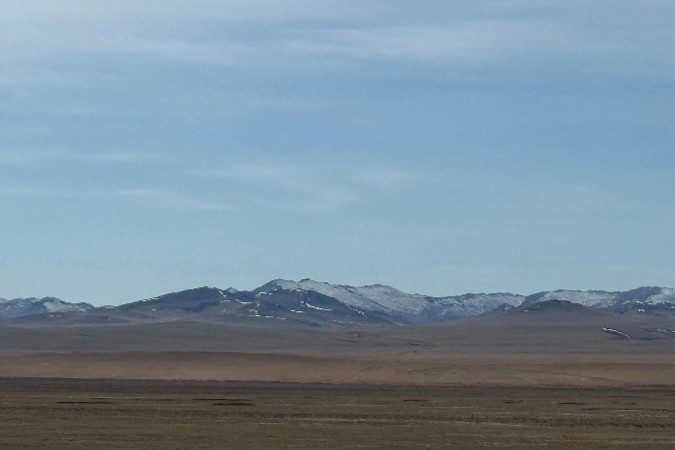
Looking back, I feel that this experience reshaped both my academic perspective and my personal outlook. It narrowed the distance between abstract language and lived experience. Terms like “loss and damage”, “adaptation”, and “resilience” became real to me in a different way—grounded not in theory, but in stories, relationships, and everyday struggles.
It also strengthened my sense of responsibility as a researcher. Research should do more than document harm. It should help amplify the voices of communities that are too often absent from global climate discussions. Mongolia’s pastoralists have contributed very little to global greenhouse gas emissions, yet they face disproportionate risks. Their experiences reveal the deep inequities of climate change and the urgent need for responses that are grounded in justice and context.
Ultimately, this fieldwork showed me that dzud cannot be understood only as an environmental or economic event. It is also social, cultural, and deeply human. It is about the survival of pastoral systems, the continuity of cultural practices, and the preservation of dignity in the face of uncertainty. Behind every statistic about livestock loss is a lived story of endurance and adaptation. If there is one lesson I carry forward from this experience, it is this: seasonality matters.
Author
Navchaa Tugjamba is a geographer and environmental researcher currently serving as Research Fellow in Digital Irrigation Extension Systems at the University of Melbourne. Her work explores climate change, disaster risk, pastoral livelihoods, and loss and damage, with a particular focus on Mongolia and other climate-vulnerable contexts. She was awarded the Saleemul Huq Memorial Scholarship and Award for Loss and Damage Research, which supported her fieldwork on the lived impacts of dzud among nomadic herder communities in Mongolia. Drawing on both academic research and personal connection to the Mongolian steppe, she writes about climate justice, seasonality, and the human dimensions of environmental change. Know more about Navchaa Tugjamba
“Truly humane research” I have seen. I have never cried to read about research result. The researcher made the real definition of Dzud. I wish further climate change agendas consider the the results in the blog.