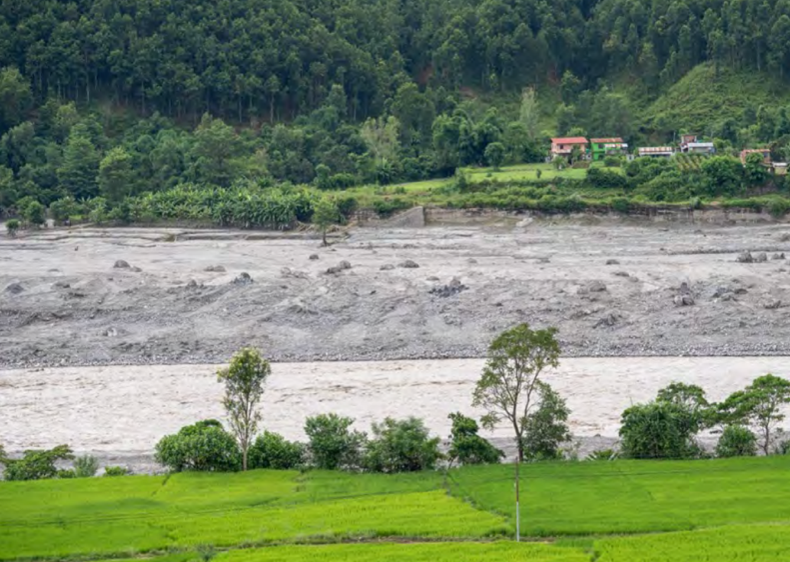
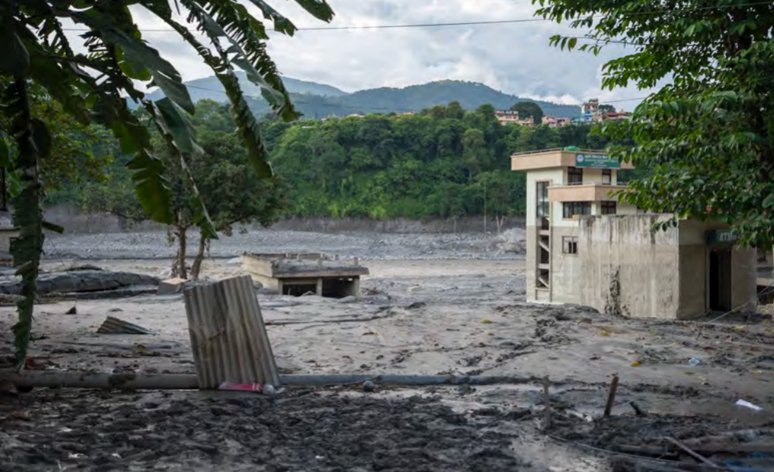
The river has receded. The mud is drying. The helicopters have begun to leave. Roads are slowly reopening, and Nepal is slowly moving from rescue to recovery. But for thousands of affected families, the disaster of August 26th has not ended.
Many have no home to return to. Thousands of children have lost their parents. Some women have become widows, and others are still waiting for bodies that may never be found. And somewhere far beyond, in India, Australia, and elsewhere, people are waiting for loved ones who travelled to Nepal and never came home. This is the part of disaster that is difficult to photograph, express, capture in the Loss and Damage methodology, and, importantly, difficult to calculate for statistical regression, and almost impossible to put a price on. Because it is the invisible erosion.
We know how to count a destroyed house and estimate the cost of a bridge, a road, a hydropower plant or a lost business. But what is the value of a child’s lost sense of safety? What is the cost of a mother’s grief? What does it mean to lose the person who was not only a loved one but also the family’s income earner? And what happens when there is no body to cremate or bury?
These are the questions at the heart of non-economic loss and damage.
Cremation without bodies
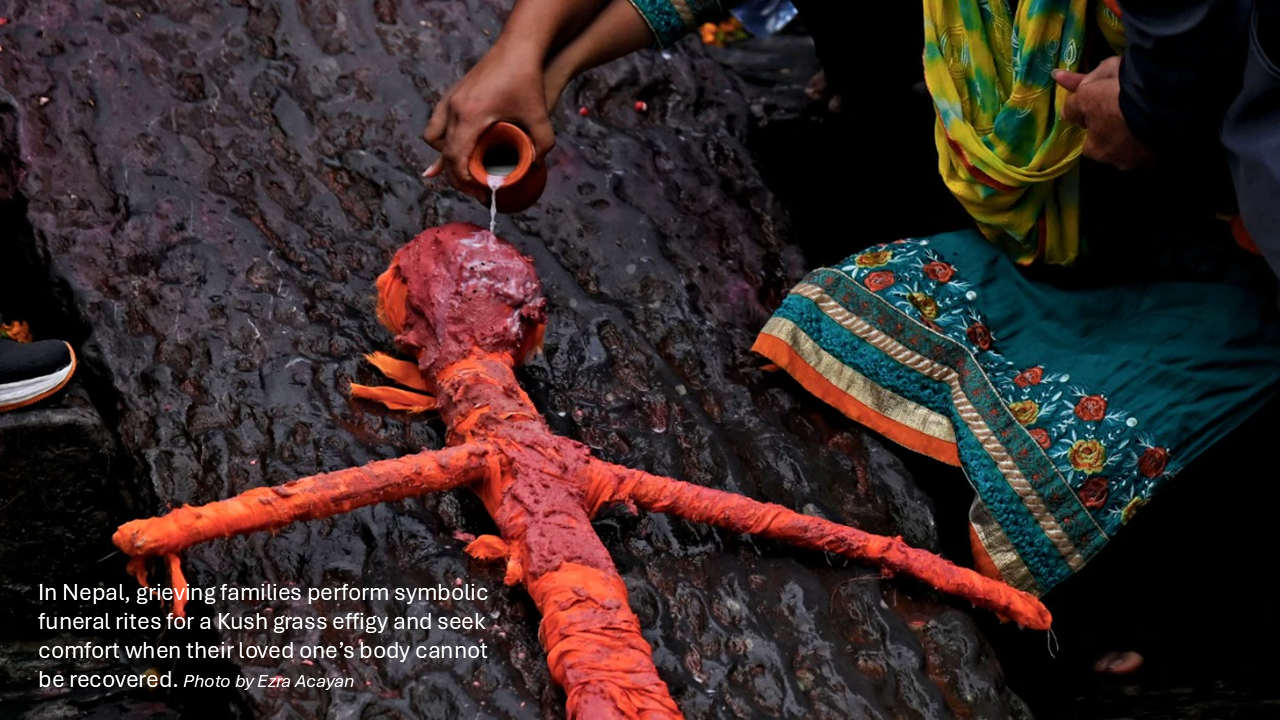
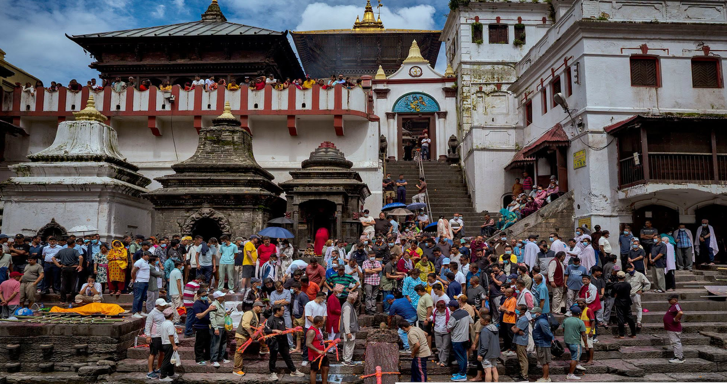
Perhaps nowhere has the invisible nature of this disaster been more painfully visible than at Pashupati Aryaghat. Families who could not recover the bodies of their loved ones performed final Hindu funeral rites using human-shaped effigies made from kusha grass. The symbolic bodies were carried to the banks of the Bagmati and cremated according to tradition. As I am penning this, my eyes are dripping silently onto my keyboard. A family has lost a loved one, yet cannot look at them one last time. There is no final embrace.
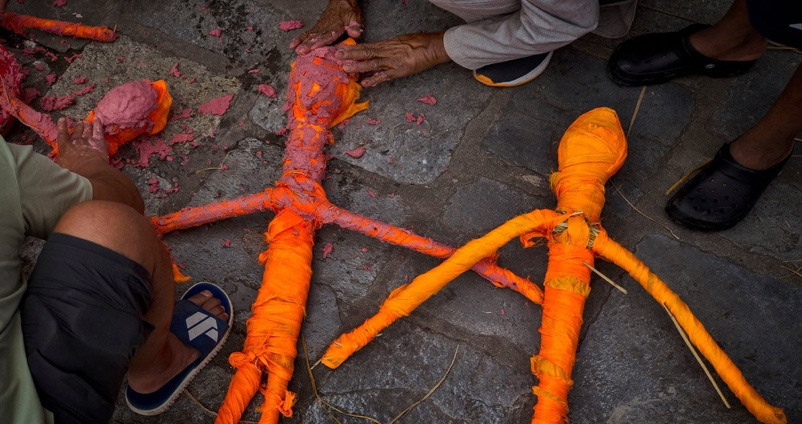
No final glimpse of a familiar face. No certainty about where their remains lie. The kusha effigy serves as a substitute for the body and as a way of saying a final goodbye.
The grass body may have been symbolic. The grief was not.
This ritual does have a deep meaning. It brings comfort to the family. It says: We have not forgotten you. You belonged to us, and you still do.
The Bhotekoshi disaster also crossed borders long before the floodwaters reached the plains. Among those reported missing were people from India, Australia and other countries who had travelled to Nepal for pilgrimage, trekking, work and tourism.
For families thousands of kilometres away, grief became a state of waiting. Some travelled to Nepal in search. For others, there is only waiting.
Those left behind
The Bhotekoshi disaster has left children displaced, separated and orphaned. Their needs extend far beyond food and shelter to education, protection, psychosocial care and restoration. For them, recovery cannot simply mean rebuilding a classroom. It means rebuilding a world in which they feel safe again. Who answers when they ask when their mother or father will return?
For the elderly, the Bhotekoshi flood took away more than their homes and belongings. It took away a place that holds a lifetime of memories. courtyard where their children grew up, the tree they planted together, and the shrine or Puja room where the family celebrated festivals together. A new house can replace the walls, but it cannot easily replace the memories.
This is the dependency chain of loss: a chain that rarely appears in a loss and damage assessment. We count the destroyed house and livestock, but how do we measure or account for the emotional and psychological trauma these grieving families are having? Thus, the climate crisis is also a crisis of care, dependency and dignity.
And it is one reason the true cost of a disaster is much larger than what appears in post-disaster damage assessments.
Lessons from Bhotekoshi
This disaster opens a bigger conversation about what we mean by loss and damage.
Nepal’s climate policies increasingly recognise that climate change causes both economic and non-economic losses. And given that Nepal contributes only about 0.1% of global greenhouse gas emissions, international climate policy must recognise this reality too.
The Fund for Responding to Loss and Damage (FRLD) was established to help particularly vulnerable developing countries address both economic and non-economic loss and damage associated with climate change. For Nepal, this should mean more than financing the immediate aftermath. It should recognise that sometimes a community needs more than a new house.
Loss-and-damage finance should help bereaved families support their mental well-being, protect vulnerable children and caregivers, preserve cultural practices, and rebuild livelihoods and dignity.
Relief to Resilience
Moving a little further from FRLD, I see a complementary role for the Green Climate Fund. Nepal already has GCF-supported work focused on glacial-lake and flood risks, including early warning, hazard monitoring, and institutional capacity.
The lesson from Bhotekoshi is clear. Such investments cannot wait for the next disaster. Climate finance must reach the last Dalit widow’s household before disaster strikes, not after. The project must strengthen transboundary early-warning systems, establish real-time hydrometeorological and glacier monitoring, guide risk-informed settlement planning, and build community resilience. Every river has a story to tell. This time, our Bhotekoshi has a powerful story to tell the world: Climate justice cannot be measured only in numbers, losses and money. It must also be able to see what lies behind the invisible erosion. Bhotekoshi reminds us that true justice begins when those who give justice learn to see what the numbers cannot show.
The views expressed are the author’s own and do not reflect those of her organisation.
Author

Bhawana Upadhyay is a Senior Specialist at the Asian Disaster Preparedness Center (ADPC) in Bangkok, working across environmental and social safeguards, gender, climate policy, and finance. Her work connects policy, practice, and communities to strengthen inclusive stakeholder engagement, climate finance, and disaster resilience. Learn more about Bhawana here.