The discourse on Loss and Damage is undergoing a significant transformation. Previously framed primarily within disaster response and humanitarian assistance, it is now increasingly recognised as a broader political, developmental, and justice-oriented issue. In the Global South, particularly in South Asia, climate impacts reveal not only environmental vulnerabilities but also entrenched inequalities related to water insecurity, ecological degradation, technological transitions, infrastructure expansion, and uneven development trajectories.
The intensification of floods in Bangladesh and Pakistan, glacial retreat in Nepal’s Himalayan region, cyclones affecting coastal communities in Sri Lanka, and worsening heatwaves and droughts across India and Pakistan underscore that climate vulnerability is inseparable from issues of power, exclusion, and governance. Consequently, Loss and Damage frameworks have to extend beyond quantifying economic losses post-disaster and address the structural conditions that generate vulnerability.
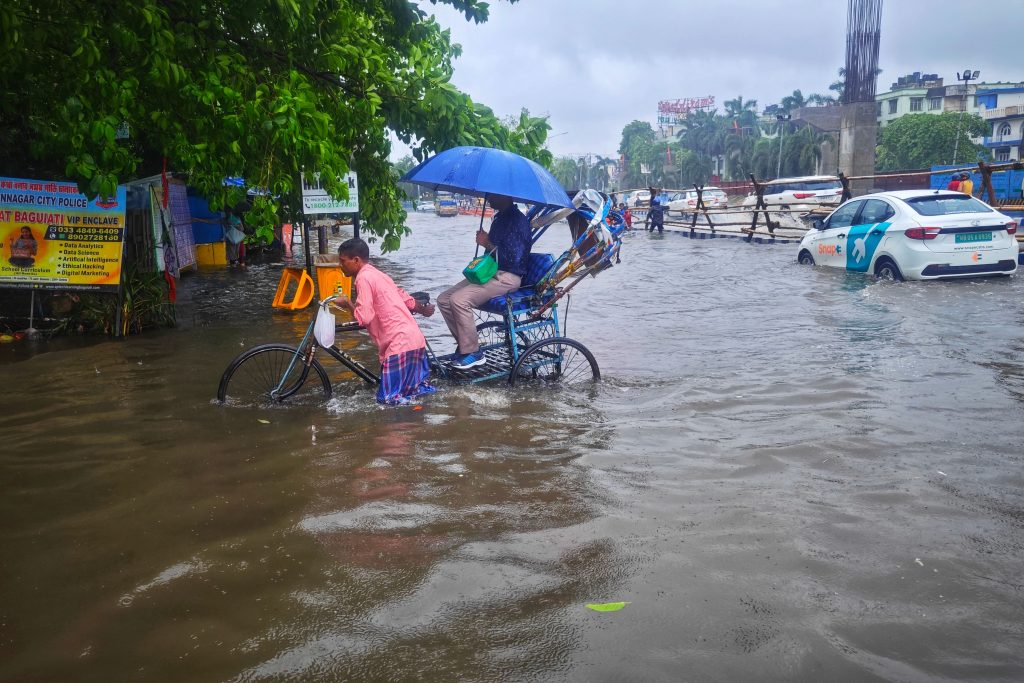
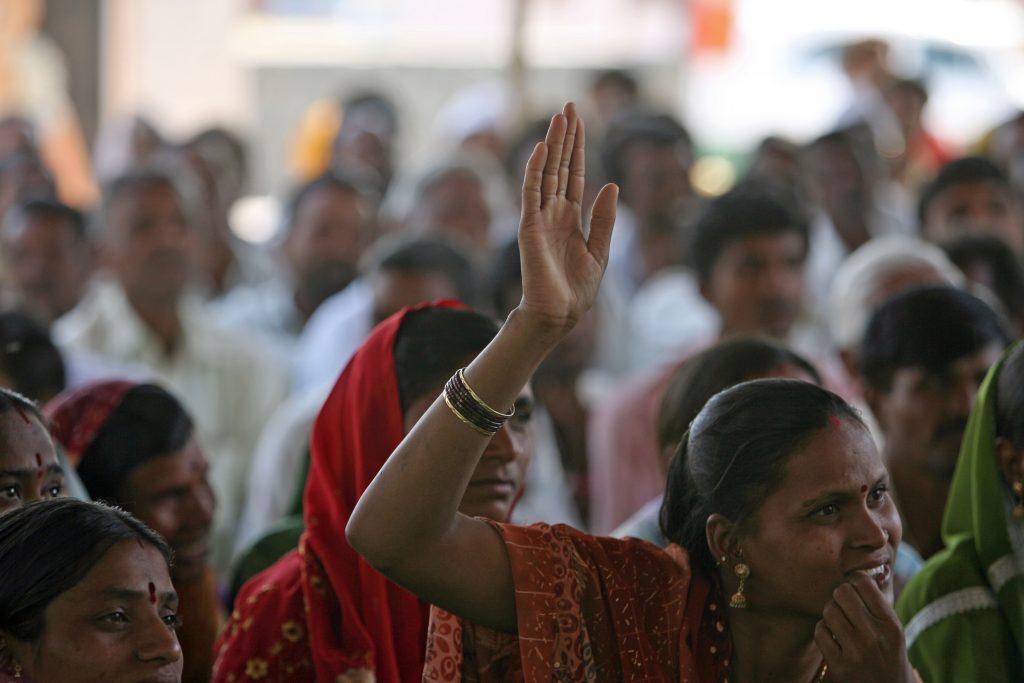
Photo: Dibakar Roy via https://www. pexels.com-30309540
A Political Turn in Loss and Damage
Recent developments in global climate governance reinforce this paradigm shift. According to analysis from the UNDP Climate Promise, nearly 80 per cent of third-generation Nationally Determined Contributions (NDCs) explicitly reference Loss and Damage, while 94 per cent prioritise water governance and resilience. This trend demonstrates increasing political recognition among developing countries that climate action must extend beyond emissions reductions to include adaptation, resilience, finance, and justice.
Countries in the Global South are increasingly reframing NDCs as comprehensive frameworks for development, finance, and justice aligned with national priorities, rather than solely as climate mitigation instruments. This represents a significant political shift. Loss and damage are now regarded as a central governance and development challenge, shaped by historical responsibility, inequality, and disparities in access to climate finance and technology.
This transition is particularly significant for South Asia, a region that exemplifies the contradictions inherent in the climate crisis. South Asian economies pursue rapid industrialisation, digital transformation, renewable energy expansion, and infrastructure-driven growth, even as they confront escalating climate impacts. These interconnected pressures reveal the limitations of climate frameworks that treat mitigation, adaptation, and development planning as separate domains.
Water at the Heart of the Crisis
Water is central to these intersecting crises. It should no longer be regarded solely as a technical development sector but as a critical climate, economic, and political issue. Floods, droughts, glacial melt, groundwater decline, salinisation, and water stress in South Asia are interconnected manifestations of systemic vulnerability linked to governance failures, inequality, and ecological degradation.
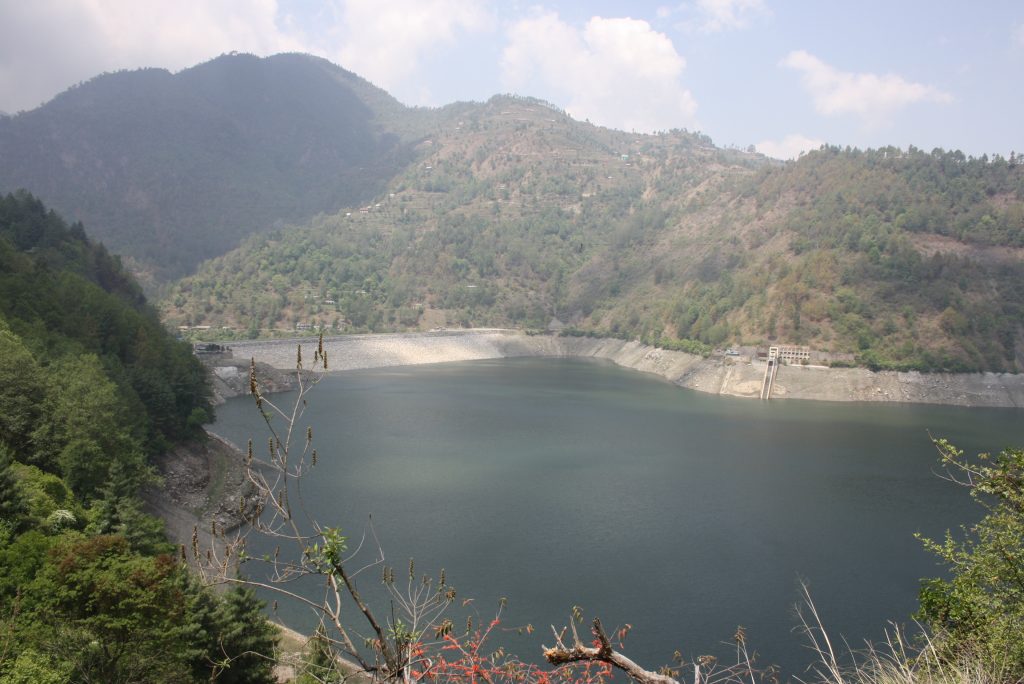
The Himalayas and the broader ‘Third Pole’ region further illustrate this reality. Rapid glacial melt threatens river systems that support billions of people in South Asia, directly linking climate risks to food security, hydropower, migration, livelihoods, ecosystems, and regional stability. Effective climate resilience planning in South Asia must therefore integrate the water-energy-food nexus, especially concerning hydropower, urbanisation, and climate finance.
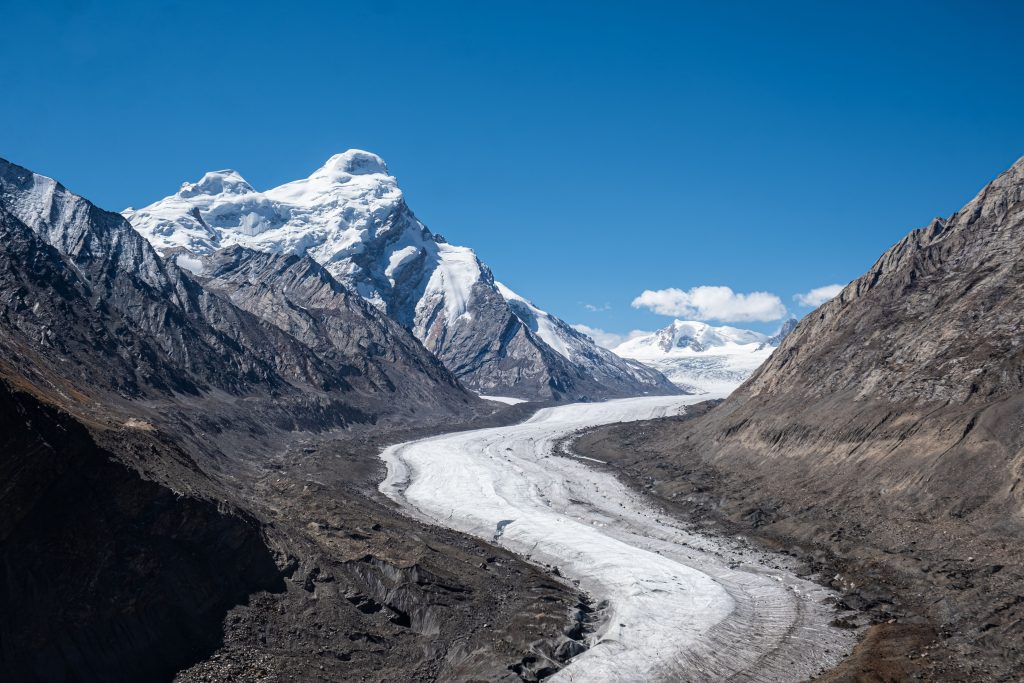
These concerns increasingly influence regional debates on just energy transitions and climate-resilient economies. Ongoing discussions in Nepal regarding hydropower, climate finance, and adaptation pathways highlight the interconnectedness of water, energy, and economic governance. Just energy transitions must be considered in relation to river systems, glaciers, ecosystems, and livelihoods that underpin regional resilience.
Decolonial and Feminist Perspectives
Simultaneously, scholars and practitioners from the Global South are challenging dominant climate narratives that prioritise technocratic solutions and carbon accounting over lived experiences. The expanding body of decolonial climate literature provides valuable insights for understanding South Asia’s climate future.
Farhana Sultana contends that climate governance perpetuates forms of ‘climate coloniality’ through unequal resource extraction, exclusionary decision-making, and the marginalisation of knowledge systems from the Global South. Similarly, Danish Mustafa critiques prevailing water governance paradigms that depoliticise water crises and overlook structural inequalities and justice concerns.
These perspectives are significant because current global climate frameworks frequently perpetuate unequal power structures, marginalising local knowledge systems and lived experiences from the Global South. Feminist and decolonial approaches are essential for reshaping climate governance, as they emphasise inequality, care economies, historical responsibility, and community-led resilience.
The UN Women report on a feminist agenda for the world’s water crisis advocates for moving beyond the commodification of water, instead recognising it as a commons grounded in care, equity, and collective governance. Such value-based frameworks are particularly relevant for advancing Loss and Damage discussions, which are often dominated by economic assessments and infrastructure-focused responses.

A feminist justice approach emphasises that climate losses extend beyond economic dimensions. Loss and Damage frameworks should account for intangible and non-economic losses, including displacement, erosion of local governance systems, cultural loss, weakening of ecological commons, and the disproportionate burdens experienced by women and marginalised communities during climate crises.
These debates are gaining urgency as South Asia becomes a significant hub for AI infrastructure, digital economies, renewable energy expansion, and maritime connectivity initiatives.
The Hidden Water Costs of AI
A less frequently discussed yet potentially transformative issue is the rapid expansion of hyperscale data centres and AI infrastructure across the Indo-Pacific. While discussions on AI transitions often emphasise energy demand and carbon emissions, considerably less attention is given to the substantial water requirements for cooling data centres.
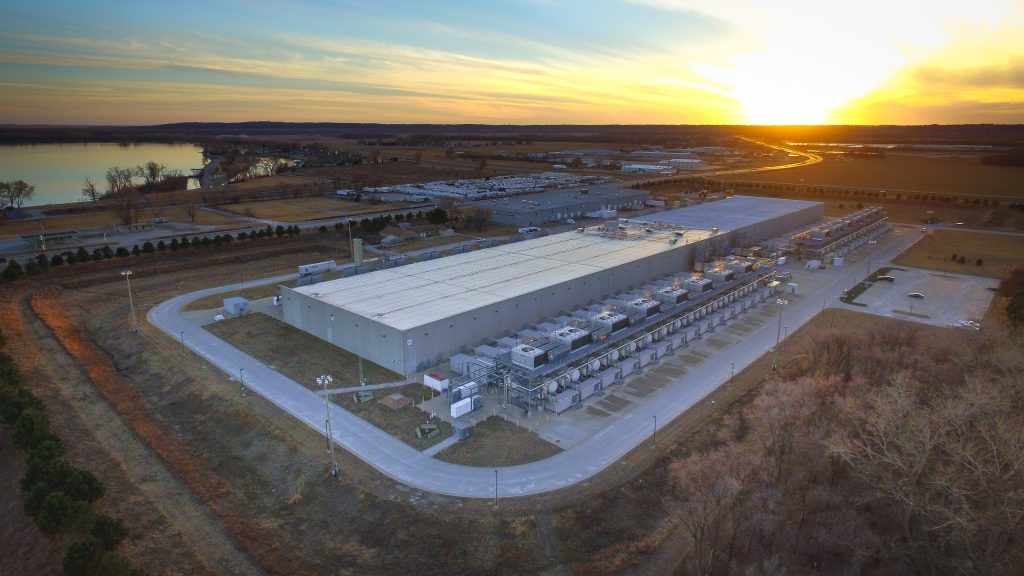
This issue warrants significantly greater attention within Loss and Damage discussions.
Regional collaborations, including work by the Alliance for Global Water Adaptation (AGWA) and the Australian Water Partnership (AWP), are examining the links between AI-driven digital infrastructure, water security, energy demand and climate resilience in the Indo-Pacific. Their research highlights that rapid expansion of water- and energy-intensive data centres in already water-stressed regions could increase pressure on local water resources and create new governance and resilience challenges if not managed through integrated planning and water-resilient policies. Such water-intensive AI infrastructure could become new drivers of slow-onset loss and damage, particularly in regions already experiencing water stress and climate vulnerability.
As South Asian countries compete to attract digital investment and technological growth, there is an increasing need for public policy and climate governance frameworks that address the environmental trade-offs among digital economic growth, sustainability, and equitable access to water.
These concerns are concrete and raise urgent political and ethical questions: Who bears the environmental costs of technological transitions? Which communities lose access to water as digital economies expand? How should climate finance and Loss and Damage mechanisms address technologically induced ecological stress?
Green Growth and Its Trade-offs
This challenge intensifies as countries pursue ‘green growth’ pathways amid debt, fiscal constraints, and uneven governance. Climate action frameworks must critically assess the environmental trade-offs associated with green growth and digital transitions, particularly in developing economies where climate vulnerability and development pressures intersect.
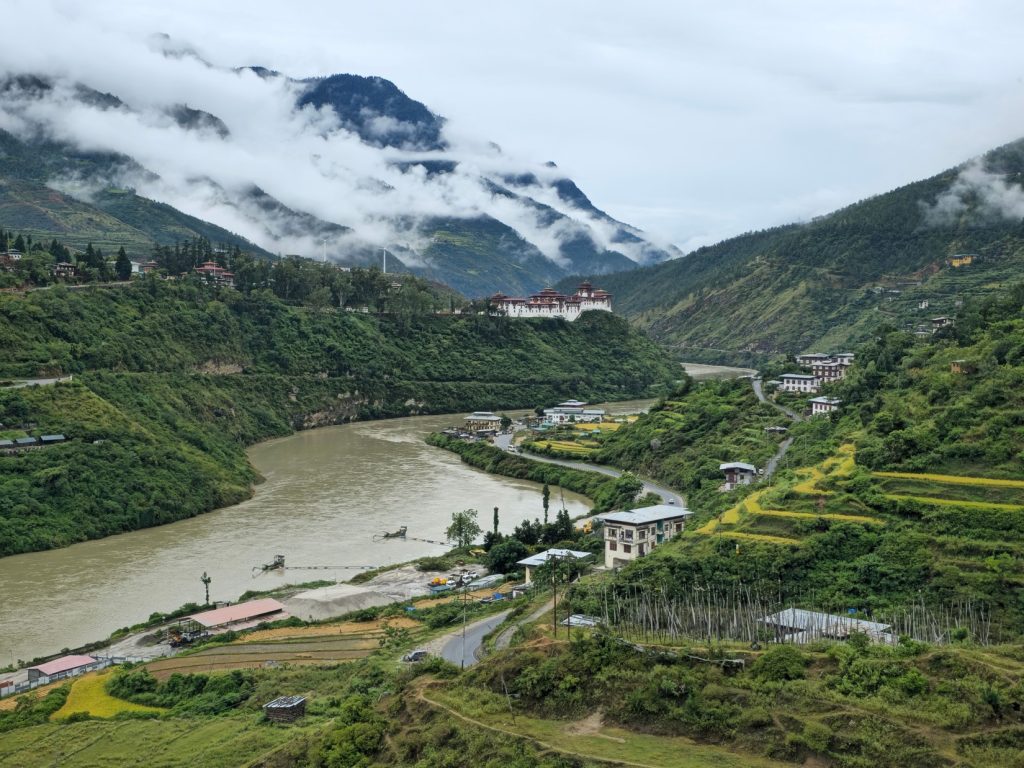
Bhutan serves as an illustrative case study. With abundant hydropower resources and initiatives such as the Gelephu Mindfulness City, Bhutan could position itself as a lower-carbon destination for AI infrastructure and digital investments. However, these transitions must be evaluated through ecological and justice-based perspectives to ensure that environmental burdens are not transferred to local communities or fragile ecosystems.
Connectivity and Decarbonisation
South Asia’s climate future will also be increasingly influenced by broader regional connectivity and decarbonization agendas. Emerging discussions on green shipping and maritime decarbonization across the Indo-Pacific reflect growing recognition that climate resilience must transcend national boundaries and traditional climate sectors.
However, large-scale infrastructure and decarbonization initiatives often produce uneven benefits and burdens. Green shipping and regional decarbonization efforts should be integrated into broader sustainability agendas to ensure that transitions do not perpetuate existing inequalities.
Rethinking Resilience
The evolving Loss and Damage agenda from the Global South is prompting the international community to reconsider the meaning of climate action. Issues of historical responsibility, finance, shared ecological commons, development sovereignty, and justice are becoming central to how countries conceptualise resilience and climate futures.
A significant gap persists between climate ambition and implementation, particularly in relation to climate finance delivery, adaptation support, and the operationalisation of the Loss and Damage Fund. Without substantive implementation support, many developing countries risk bearing disproportionate climate costs despite having minimal historical contributions to emissions.
South Asia has a unique opportunity to develop alternative climate leadership models grounded in solidarity, regional cooperation, equity, and locally informed knowledge systems, rather than relying solely on technocratic climate governance. The region can contribute to global climate debates by promoting water-centred resilience frameworks, integrating feminist and decolonial justice principles into adaptation planning, and highlighting emerging risks associated with AI infrastructure, energy transitions, and extractive green growth models.
The challenge ahead is therefore not solely technical; it is fundamentally political.
Resilience cannot be achieved solely through infrastructure. It must also be grounded in justice, participation, care, and the protection of shared ecological resources, including water.
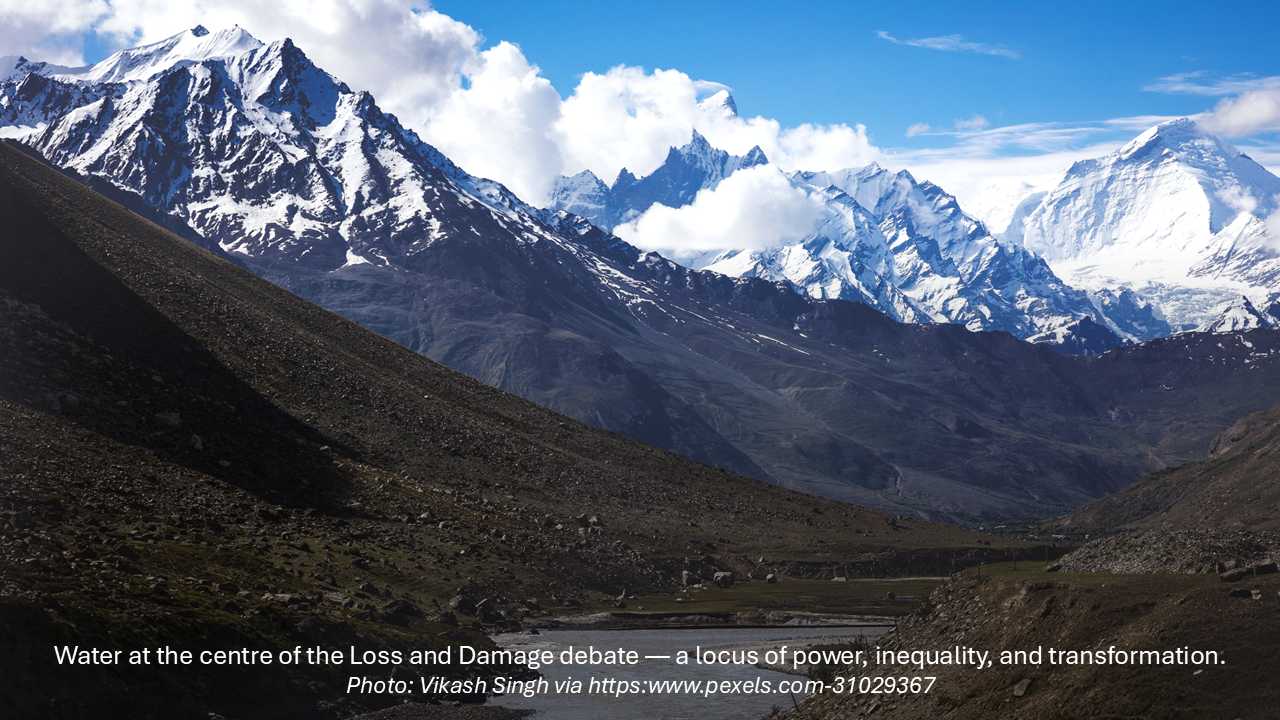
In many respects, the future of Loss and Damage discourse may ultimately depend on the extent to which water is recognised not only as a resource under stress but also as a locus of power, inequality, and transformation.
References
- Alliance for Global Water Adaptation (AGWA) – Data Centres and Indo-Pacific Water Security
- Australian Water Partnership – Global Water Security and Australia Partnerships
- UNDP Climate Promise – Third Generation NDCs and Global Climate Action
- UN Women – From Commodity to Common Good: A Feminist Agenda to Tackle the World’s Water Crisis
- Farhana Sultana – The Unbearable Heaviness of Climate Coloniality
- Danish Mustafa – Decolonising Water
- Water Alternatives – Decolonising Water Blog
- Loss and Damage Observatory
- ICCCAD Climate Tribune – July 2023 Edition
Author

Neha Khandekar is an International Development Consultant specialising in Water Resources Management, with over a decade of experience across South Asia. Working with institutions and stakeholders on both technical and strategic advisory, she helps advance inclusive water science, policy, and practice, with an emphasis on partnership-building and equitable, sustainable water governance. Her notable missions include serving as South Asia Coordinator with the Australian Water Partnership, a program of DFAT, an Advisor to the Inclusion Task Force under India’s G20 Presidency (2023) and representing South Asia as a Gender and Youth Inclusion Delegate at the Geneva Water Hub, affiliated with the World Meteorological Organisation. Know more about Neha Khandekar here.